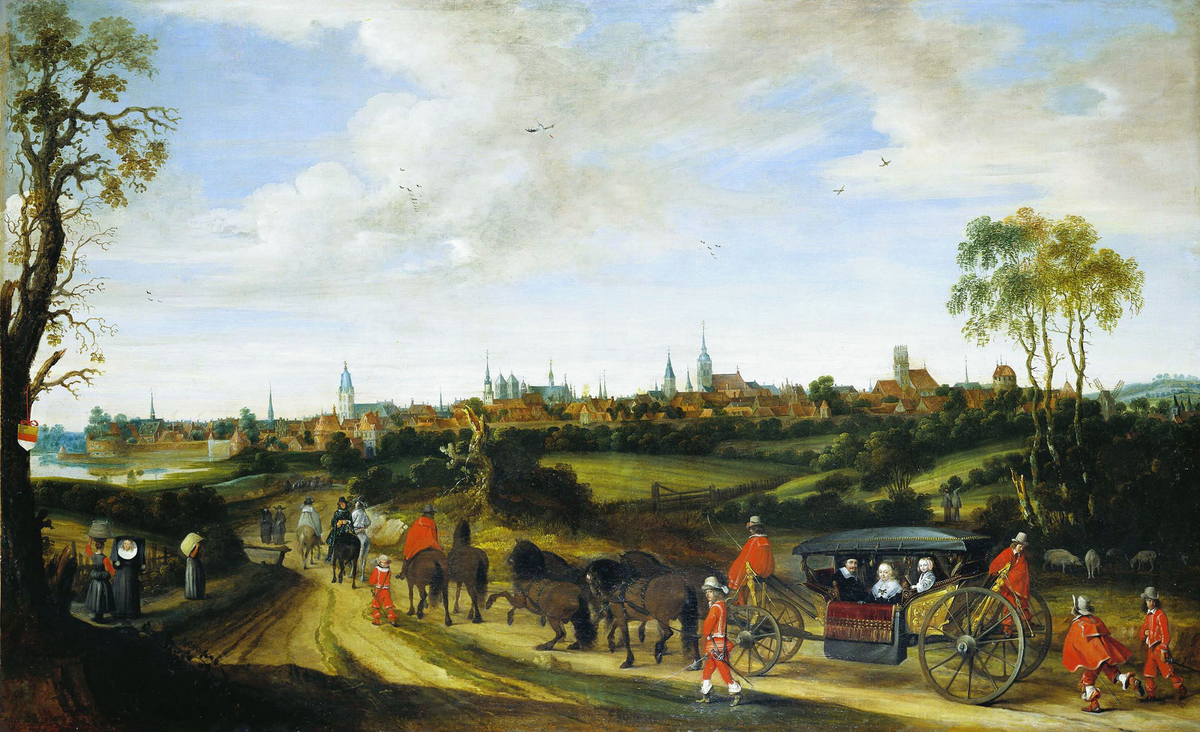
Thirty Years' War ends, Habsburg Monarchy gains independence.
Austria

Political
4 min read
Updated By: History Editorial Network (HEN)
Published:
In the aftermath of the Thirty Years' War, the Peace of Westphalia marked a pivotal moment in European history. The treaty brought an end to one of the most devastating conflicts on the continent, which had been fueled by religious and territorial disputes. It recognized the independence of the Austrian Habsburg Monarchy and reshaped the political landscape of Europe.
The Peace of Westphalia consisted of two separate agreements, the Treaty of Münster and the Treaty of Osnabrück, signed by various European powers. These treaties not only ended the war between Catholic and Protestant states but also established a new system of international relations based on the principles of sovereignty and non-interference in internal affairs.
The recognition of the independence of the Austrian Habsburg Monarchy solidified its position as a major power in Europe and allowed for the unification of its diverse territories under a centralized authority. This laid the groundwork for the Habsburgs to continue to play a significant role in European politics for centuries to come.
The Peace of Westphalia set a precedent for future diplomatic negotiations and shaped the concept of modern statehood. Its principles have had a lasting impact on the development of international law and the conduct of relations between nations. The treaty's legacy continues to be studied by historians and political scientists as a defining moment in European history. #PeaceofWestphalia #AustrianHabsburgMonarchy #ThirtyYearsWar #EuropeanHistory
Primary Reference
Peace of Westphalia | Definition, Map, Results, & Significance ...

Explore the Life Moments of
 AI Twin