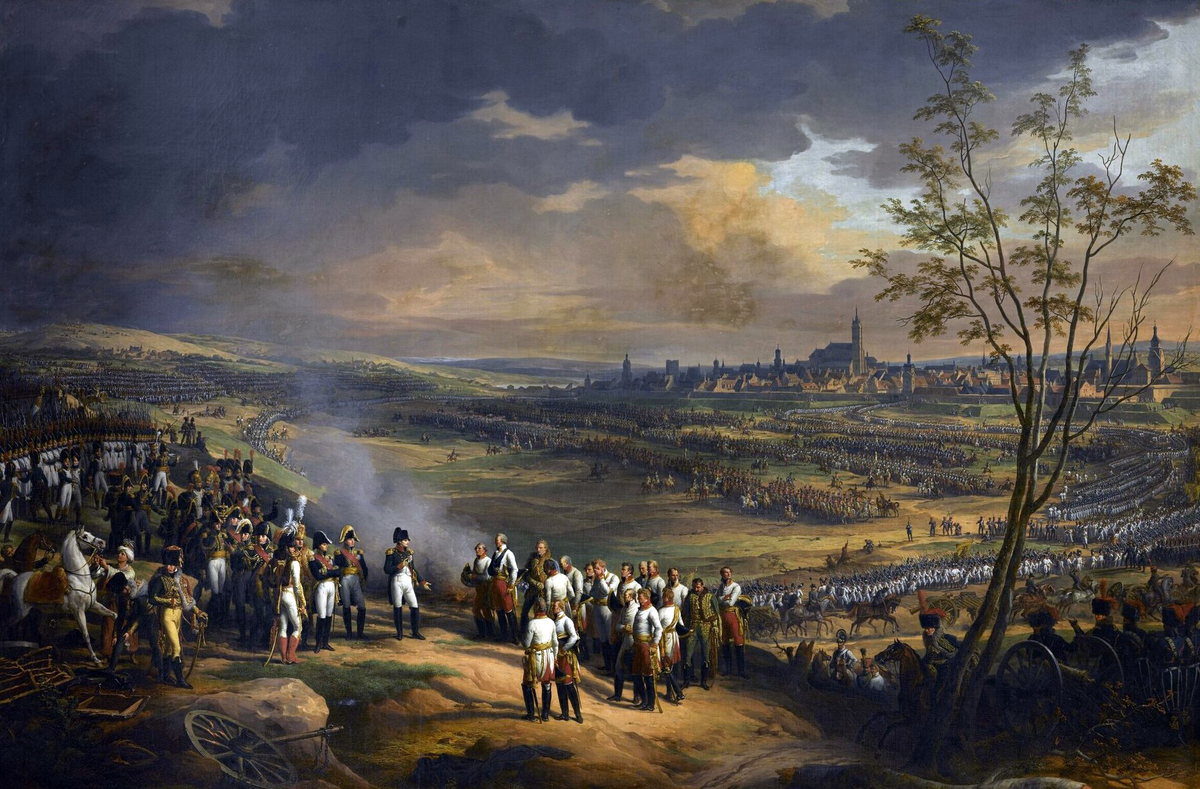
French-Bavarian force crosses Rhine into Germany during Ulm Campaign, marking strategic advancement.
Austria
Military
War of the Third Coalition
3 min read
Updated By: History Editorial Network (HEN)
Published:
In the Ulm Campaign, a combined French-Bavarian force led by Napoleon Bonaparte crossed the Rhine into Germany, aiming to engage the Austrian forces. This move was part of the War of the Third Coalition, where Austria sought to challenge Napoleon's growing influence in Europe. The strategic significance of the campaign lay in Napoleon's aim to encircle and force the surrender of the Austrian army under General Karl Mack von Leiberich, stationed in the fortress of Ulm.
The French-Bavarian forces swiftly moved to encircle Ulm, leading to the surrender of the Austrian army in a decisive victory for Napoleon. The Ulm Campaign severely weakened the Austrian position in the war, paving the way for further French successes in Central Europe. The coordinated maneuvers and swift execution of Napoleon's strategy highlighted the effectiveness of his military tactics and leadership.
The Ulm Campaign reshaped the balance of power in Europe, solidifying Napoleon's dominance and diminishing Austria's influence on the continent. This event marked a turning point in the Napoleonic Wars and emphasized the importance of innovative military strategies in shaping the outcomes of conflicts.
#UlmCampaign #Napoleon #Austria #WaroftheThirdCoalition #MilitaryStrategy

Explore the Life Moments of
 AI Twin