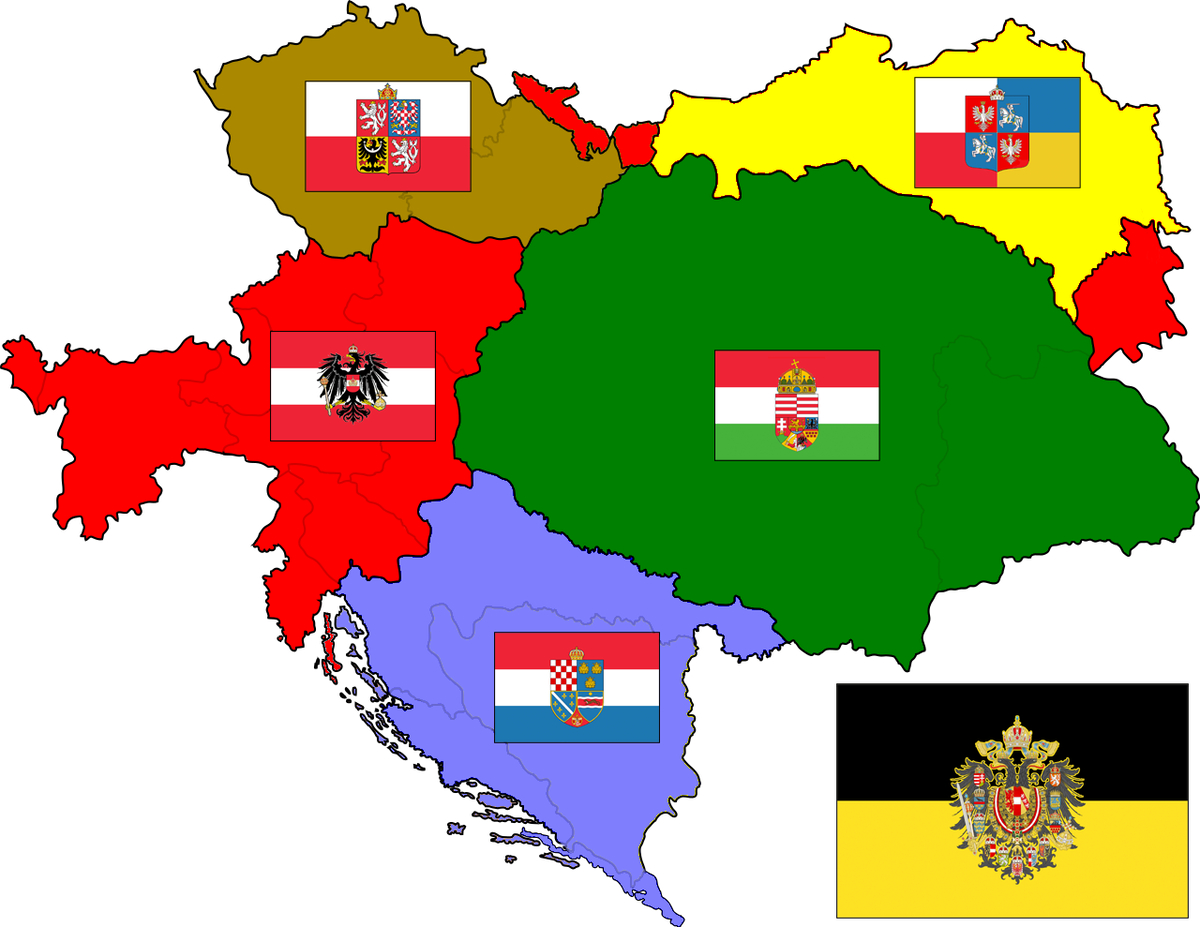
Establishment of the Dual Monarchy grants Hungary equal status in the Austria-Hungary empire.
Austria

Political
3 min read
Updated By: History Editorial Network (HEN)
Published:
In 1867, the Dual Monarchy of Austria-Hungary was established, granting Hungary equal status within the empire. The background of this event lies in the Austro-Hungarian Compromise of 1867, a political agreement aimed at reconciling the interests of the Austrian Empire and the Kingdom of Hungary. The compromise resulted in the creation of a new political entity where Austria and Hungary were recognized as separate states with a shared monarch.
The impact of this establishment was significant as it marked a turning point in the history of the Austrian Empire and Hungary. Hungary gained more autonomy and control over its domestic affairs, including its own parliament, government, and administration. This move helped ease tensions within the empire and fostered a sense of national identity among the Hungarian population.
The Dual Monarchy of Austria-Hungary brought about a period of relative stability and prosperity, leading to economic development and cultural flourishing in the region. However, internal discontent and ethnic tensions would eventually contribute to the empire's dissolution following World War I.
#Austria #Hungary #AustroHungarianCompromise #DualMonarchy #Empire #Autonomy #Unity
Primary Reference
Austro-Hungarian Compromise of 1867 - Wikipedia

Explore the Life Moments of
 AI Twin