Referendum on Banning Communist Party Fails
Australia
Political
4 min read
Updated By: History Editorial Network (HEN)
Published:
Updated:
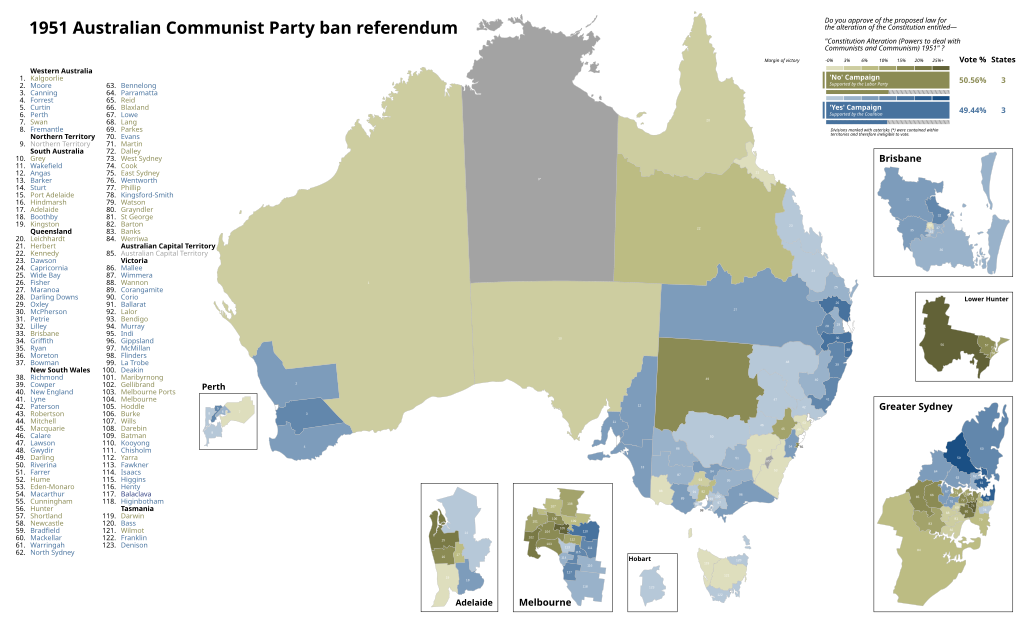
In 1951, a referendum was held in Australia to determine whether the Constitution should be amended to grant the Menzies Government the authority to outlaw the Communist Party. The government under Prime Minister Robert Menzies sought to take this step amidst growing Cold War tensions and fears of communist influence.
The proposed change stirred intense debate and controversy among the Australian public. Proponents argued that banning the Communist Party was necessary to safeguard national security and prevent subversion. On the other hand, opponents viewed it as an infringement on civil liberties and freedom of political expression. Ultimately, in a democratic vote, the majority of voters rejected the referendum, signaling a strong commitment to upholding democratic principles and the rights of political dissent.
The outcome of the referendum had a lasting impact on Australian politics and civil liberties. It reinforced the importance of democratic values and respect for diverse political views. The rejection of the referendum also marked a significant moment in Australian history, highlighting the strength of democratic institutions and the willingness of the populace to stand up for their rights.
The event underscored the enduring values of democracy, civil liberties, and freedom of expression in Australian society. It serves as a reminder of the country's commitment to upholding these principles even in times of political uncertainty or external pressures.
#Australia #Referendum #CommunistParty #Democracy #CivilLiberties #ColdWar

Explore the Life Moments of
 AI Twin