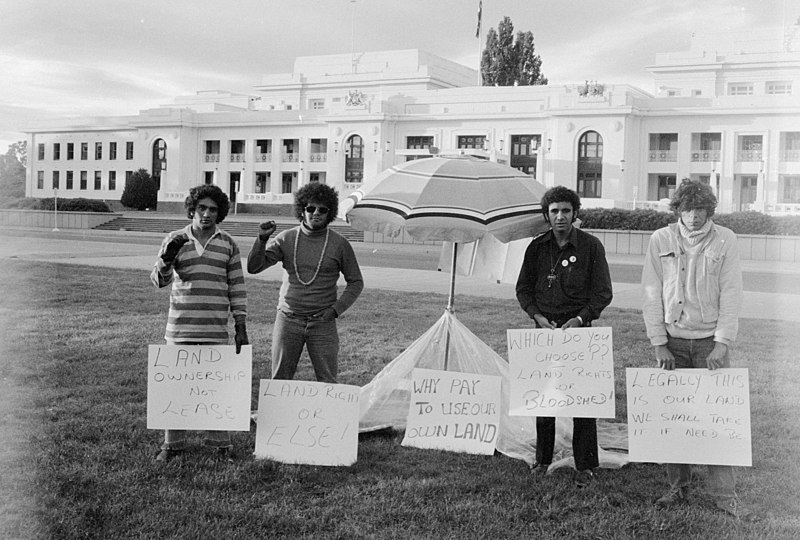
Protest Tent Embassy Against Mining on Reserves.
Australia
Political
Social Issues
3 min read
Updated By: History Editorial Network (HEN)
Published:
Updated:
In 1972, the Aboriginal Tent Embassy was established on the reserves after the Coalition government approved exploration licenses and mining tenements. The decision sparked outrage among the Aboriginal community, who saw it as a threat to their lands and cultural heritage.
The Embassy was a symbol of protest and resistance, with activists camping outside the Parliament House in Canberra to draw attention to their cause. The Embassy became a focal point for indigenous rights, drawing support from both Aboriginal and non-Indigenous Australians.
The impact of the Embassy was profound, leading to increased awareness of the issues facing the Aboriginal community and putting pressure on the government to address their concerns. The Embassy also sparked debate about land rights and sparked a national conversation about indigenous rights and sovereignty.
Over the years, the Embassy has remained a symbol of indigenous resistance and resilience, with activists using it as a platform to advocate for land rights, self-determination, and reconciliation.
The establishment of the Aboriginal Tent Embassy marked a turning point in Australia's history, highlighting the ongoing struggles of the Aboriginal community and their fight for recognition and justice. It continues to serve as a reminder of the importance of respecting and protecting indigenous rights and lands.
#AboriginalTentEmbassy #IndigenousRights #LandRights #Protest #Activism

Explore the Life Moments of
 AI Twin