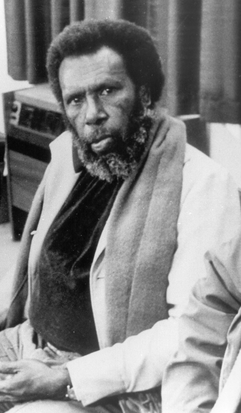
High Court's Mabo Decision and Nick Greiner's Resignation
Australia
Political
Indigenous Rights
4 min read
Updated By: History Editorial Network (HEN)
Published:
Updated:
In 1992, the High Court of Australia made a groundbreaking decision in the Mabo case, ruling that indigenous native title exists in Australia. This ruling challenged the long-held legal doctrine of terra nullius, which considered the land to be uninhabited before British colonization. The case was led by Eddie Mabo, a Torres Strait Islander, who fought for recognition of indigenous land rights.
The Mabo decision had a profound impact on indigenous land rights in Australia, recognizing the ongoing connection of Aboriginal and Torres Strait Islander peoples to their land. It overturned centuries of legal precedent and opened the door for indigenous communities to make claims over their traditional lands based on their native title rights.
The ruling was a significant step towards reconciliation between indigenous and non-indigenous Australians, acknowledging the injustices of the past and working towards a more equitable future. It paved the way for the Native Title Act of 1993, which provides a framework for indigenous land claims and negotiations.
In the wake of the Mabo decision, there was a shift in attitudes towards indigenous land rights and a growing recognition of the importance of indigenous culture and heritage. The decision was celebrated as a victory for indigenous rights and a crucial step towards recognizing the unique status of Australia's First Nations peoples.
Amidst the backdrop of this landmark decision, New South Wales Premier Nick Greiner resigned, marking a moment of political upheaval. The Mabo decision had far-reaching implications, not only in legal terms but also in shaping the social and political landscape of Australia.
#MaboDecision #IndigenousRights #NativeTitle #TerraNullius #LandRights #Reconciliation #AustralianHistory
Primary Reference
Mabo decision

Explore the Life Moments of
 AI Twin