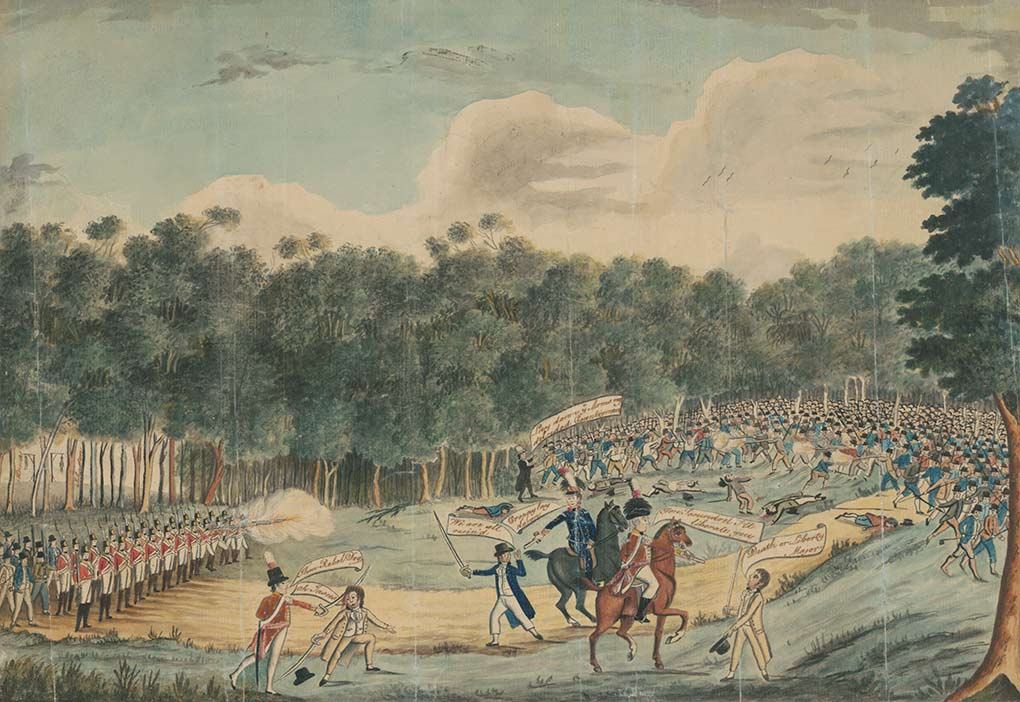
Castle Hill convict rebellion
Australia
Battle
3 min read
Updated By: History Editorial Network (HEN)
Published:
Updated:
In 1804, a group of Irish convicts rose against the colonial authorities in New South Wales, in what became known as the Castle Hill convict rebellion or the second Battle of Vinegar Hill. The rebellion was fueled by harsh treatment, oppression, and a desire for freedom among the convicts.
The uprising was led by Phillip Cunningham, an Irish convict who plotted to march to Sydney, declaring an Irish Republic. However, their plans were discovered, leading to a confrontation with the colonial troops at Rouse Hill, before being quashed at Castle Hill.
The impact of the rebellion was significant, as it led to a crackdown on convicts and stricter penal policies. Several rebels were killed in the conflict, while others were captured and later executed or deported. The event highlighted the challenges faced by the penal colony and the deep-seated discontent among the convict population.
Despite its failure, the Castle Hill convict rebellion is remembered as a symbol of resistance against oppression and injustice. It remains a reminder of the struggles faced by early settlers in Australia and the fight for freedom and dignity.
#CastleHillConvictRebellion #SecondBattleofVinegarHill #IrishConvicts #ColonialAuthority #Resistance #AustraliaHistory
Primary Reference
Castle Hill convict rebellion

Explore the Life Moments of
 AI Twin