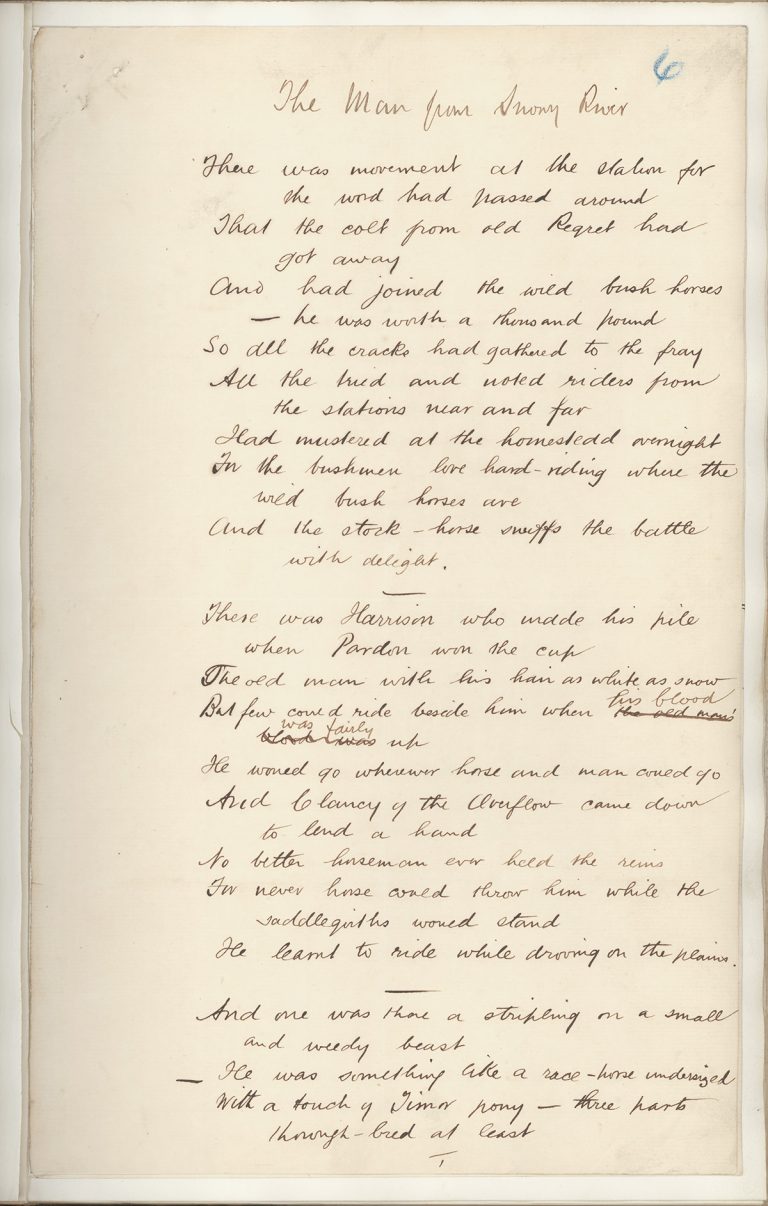
Banjo Paterson published "The Man from Snowy River".
Australia
Literature
8 min read
Updated By: History Editorial Network (HEN)
Published:
Updated:
On April 26, 1890, Australian poet Banjo Paterson published "The Man from Snowy River," a ballad that would become one of the most iconic pieces of Australian literature. This poem not only celebrated the rugged beauty and adventurous spirit of the Australian high country but also contributed significantly to the country's national identity.
Banjo Paterson: The Poet and His Times
Andrew Barton "Banjo" Paterson was born on February 17, 1864, in New South Wales, Australia. He grew up in the rural bush, which deeply influenced his writing. Paterson worked as a lawyer, journalist, and war correspondent, but he is best known for his poetry, which vividly captured the Australian landscape and the lives of its people.
In the late 19th century, Australia was experiencing a burgeoning sense of national identity. The country was still a collection of British colonies, but there was a growing movement towards federation, which would eventually occur in 1901. During this period, literature and art played a crucial role in fostering a unique Australian culture.
"The Man from Snowy River": The Ballad
"The Man from Snowy River" is a narrative poem that tells the story of a young, unknown horseman from the high country who takes part in a challenging cattle roundup. The plot revolves around a valuable colt that escapes and joins a wild mob of horses in the rugged mountains. The experienced riders are hesitant to chase the mob into the rough terrain, but the young man, despite his small and unassuming stature, proves his extraordinary skill and bravery.
Here is a brief excerpt from the poem:
"He hails from Snowy River, up by Kosciuszko's side,
Where the hills are twice as steep and twice as rough,
Where a horse's hoofs strike firelight from the flint stones every stride,
The man that holds his own is good enough."
Paterson's vivid imagery and rhythmic verse captured the essence of the Australian bush and the spirit of its inhabitants. The poem celebrates themes of courage, resilience, and the quintessential Australian trait of proving oneself against the odds.
Cultural Impact and Legacy
"The Man from Snowy River" was an instant success upon its publication in The Bulletin, a popular Australian magazine known for its nationalist stance and support of Australian writers and artists. The poem resonated deeply with Australians, who saw in it a reflection of their own values and experiences.
The character of the "Man from Snowy River" became a national hero, embodying the ideal of the Australian bushman: tough, resourceful, and independent. The poem contributed to the romanticized image of the Australian outback and its people, influencing the country's cultural narrative.
Adaptations and Celebrations
The popularity of "The Man from Snowy River" extended beyond the written word. In 1982, the poem was adapted into a highly successful Australian film, directed by George T. Miller and starring Tom Burlinson and Sigrid Thornton. The film further cemented the poem's place in Australian popular culture and introduced its story to a global audience.
In addition to film adaptations, the poem has inspired various artistic and cultural expressions, including stage productions, music, and artwork. The annual "Man from Snowy River Bush Festival" held in Corryong, Victoria, celebrates the poem's legacy with bush poetry, rodeo events, and demonstrations of traditional Australian skills.
#MomentsOfLife #MoofLife_Moment #MoofLife #BanjoPaterson #TheManFromSnowyRiver #AustralianLiterature #AustralianPoetry #CulturalHeritage
Primary Reference
The Man from Snowy River (poem)

Explore the Life Moments of
 AI Twin