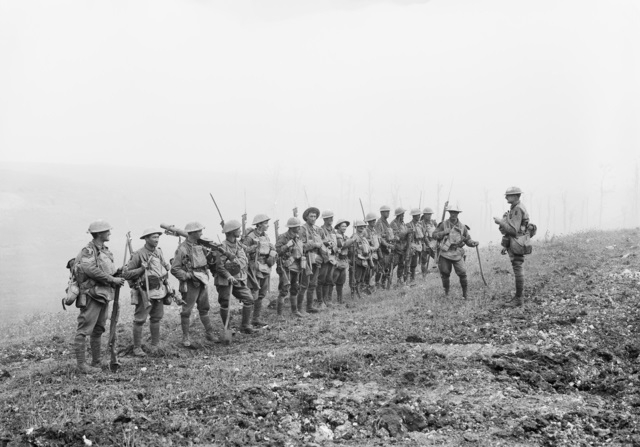
Australian Troops Spearhead the Battle of Amiens
Australia
War
8 min read
Updated By: History Editorial Network (HEN)
Published:
Updated:
In 1918, the Battle of Amiens marked a significant turning point in World War I, with Australian troops playing a crucial role in the offensive against the German Hindenburg Line. This battle is often referred to as the "black day of the German Army" due to the severe blow it dealt to German forces. On August 12, 1918, in recognition of his exceptional leadership, Australian commander General Sir John Monash was knighted on the battlefield by King George V.
The Battle of Amiens: Context and Significance
The Battle of Amiens began on August 8, 1918, and was a key part of the Allied Hundred Days Offensive, which ultimately led to the end of World War I. This offensive was designed to break through the formidable German Hindenburg Line, a series of entrenched defensive positions that had proven resistant to previous attacks.
The battle involved a coordinated assault by British, Canadian, Australian, and French forces. The operation was meticulously planned and executed, with a focus on speed, surprise, and the use of combined arms tactics, including infantry, artillery, tanks, and aircraft.
Australian Troops' Role
Australian troops, part of the Australian Corps under the command of General Sir John Monash, spearheaded the attack. Monash's innovative strategies and emphasis on detailed planning and coordination played a pivotal role in the success of the offensive. His approach integrated the use of tanks, aircraft, artillery, and infantry in a synchronized manner, which was revolutionary at the time.
On the morning of August 8, the Allies launched a surprise attack that caught the German forces off guard. The Australian troops advanced rapidly, breaking through the German lines and capturing key positions. The effectiveness of the attack resulted in significant German casualties and the capture of thousands of prisoners.
"The Black Day of the German Army"
The German High Command referred to August 8, 1918, as the "black day of the German Army" due to the devastating impact of the Allied offensive. The surprise and scale of the attack shattered German morale and significantly weakened their defensive capabilities. The success of the Battle of Amiens demonstrated the effectiveness of the new tactics and marked a shift in the momentum of the war, favoring the Allies.
Knighthood of General Sir John Monash
In recognition of his exceptional leadership and the pivotal role played by the Australian Corps, General Sir John Monash was knighted in the field by King George V on August 12, 1918. This rare and prestigious honor highlighted Monash's significant contributions to the Allied war effort and his innovative approach to military strategy.
Monash's knighthood was a moment of immense pride for Australia, showcasing the vital role of Australian forces in the war. It also underscored Monash's reputation as one of the most capable and forward-thinking military leaders of the time.
Legacy of the Battle of Amiens
The Battle of Amiens set the stage for the continued success of the Hundred Days Offensive, which ultimately led to the armistice and the end of World War I in November 1918. The battle demonstrated the effectiveness of modern combined arms tactics and highlighted the importance of planning, coordination, and surprise in military operations.
For Australia, the battle reinforced the bravery and effectiveness of its troops on the world stage. The contributions of the Australian Corps under Monash's leadership were a source of national pride and have been commemorated in Australian military history.
#MomentsOfLife #MoofLife_Moment #MoofLife #BattleOfAmiens #AustralianMilitaryHistory #WorldWarI #JohnMonash #HindenburgLine #HundredDaysOffensive

Explore the Life Moments of
 AI Twin