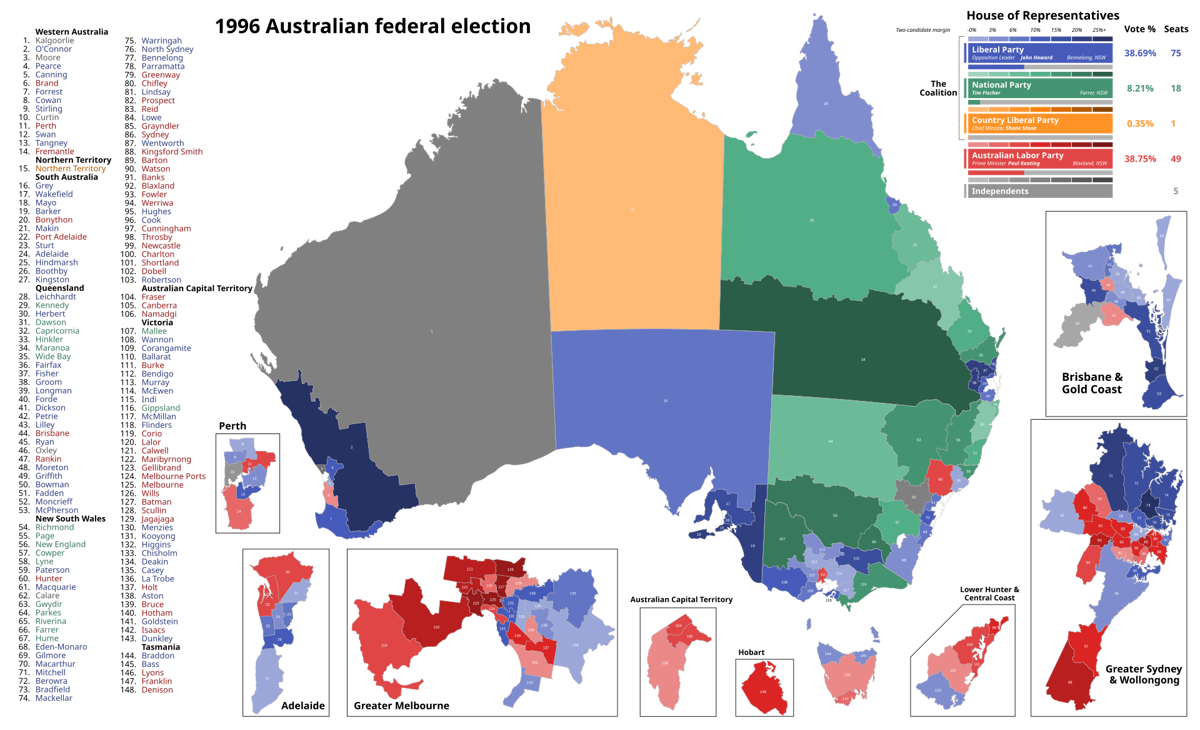
1996 Federal Election: Howard defeats Keating after 13-year Labor rule
Australia
Political
4 min read
Updated By: History Editorial Network (HEN)
Published:
Updated:
After 13 years of Labor government, Liberal John Howard emerged victorious in the Australian federal election, defeating incumbent Prime Minister Paul Keating. Howard's win marked a significant turning point in Australian politics, bringing an end to the longest-serving Labor government in the country's history.
John Howard campaigned on promises to restore economic stability, reduce unemployment, and address issues such as gun control and immigration. His victory was seen as a rejection of Keating's government policies, including economic reforms and efforts to modernize Australia. Howard's leadership approach appealed to a diverse range of voters, leading to a decisive win for the Liberal Party.
The 1996 election result was a clear indication of the Australian public's desire for change and a shift in political priorities. Howard's government introduced various reforms during his tenure, including changes to the taxation system, industrial relations, and education.
The impact of Howard's victory was felt across Australia, with a sense of optimism and a renewed focus on economic growth and stability. The change in leadership also had implications for Australia's foreign policy, particularly in relation to regional relations and alliances.
The 1996 Australian federal election marked a significant moment in the country's political history, signaling a shift in power dynamics and a new direction for governance. John Howard's tenure as Prime Minister left a lasting legacy on Australian politics, influencing policies and debates for years to come.
#AustralianPolitics #JohnHoward #PaulKeating #ElectionImpact

Explore the Life Moments of
 AI Twin