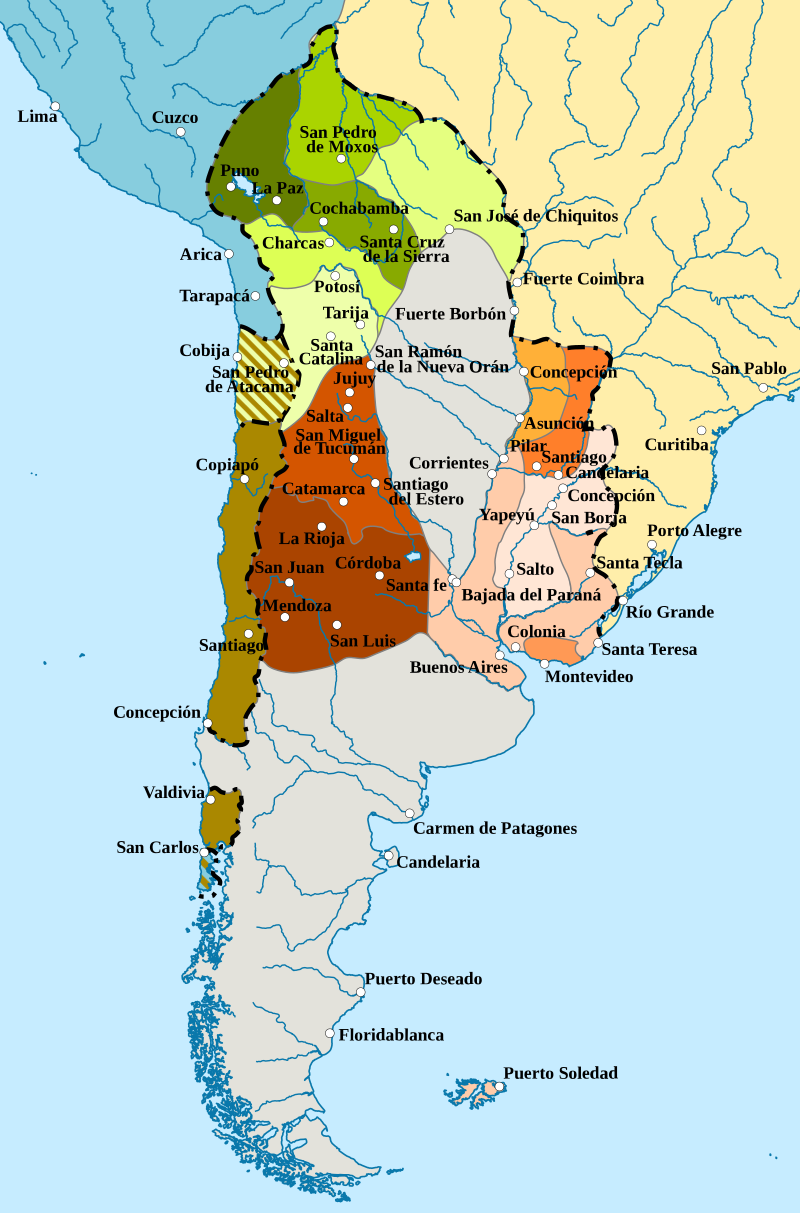
Creation of the Viceroyalty in South America centralized power and administration effectively.
Argentina
Political
3 min read
Updated By: History Editorial Network (HEN)
Published:
The Viceroyalty of the Río de la Plata was established as a part of the Bourbon reforms in the Americas. It aimed to strengthen control over the region encompassing territories of present-day Argentina, Bolivia, Paraguay, and Uruguay. The Viceroyalty's capital was set in Buenos Aires, strategically located for trade and defense purposes.
The consolidation of the Viceroyalty brought bureaucratic, economic, and political changes, centralizing administrative functions previously managed by the Viceroyalty of Peru. This shift allowed for more effective governance and improved communication between authorities and the territories. The region's thriving economy, driven by trade and agriculture, received a boost under the Viceroyalty's rule, leading to increased prosperity.
The establishment of the Viceroyalty of the Río de la Plata marked a pivotal moment in the history of Argentina, shaping its political and social landscape for years to come. It laid the groundwork for the region's eventual independence movement and influenced its cultural identity. The Viceroyalty's legacy is evident in Argentina's rich heritage, blending indigenous, European, and African influences.
#ViceroyaltyoftheRiodeLaPlata #BourbonReforms #ArgentinaHistory #ColonialLegacy

Explore the Life Moments of
 AI Twin