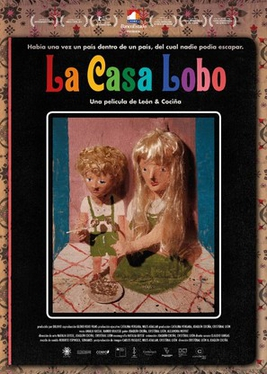
The Wolf House
Entertainment
7 min read
Updated By: History Editorial Network (HEN)
Published:
Updated:
The Wolf House (La Casa Lobo, 2018) is a Chilean stop-motion animated horror film directed by Cristóbal León and Joaquín Cociña. The film is a surreal, nightmarish allegory loosely based on the real-life Colonia Dignidad, a secretive and abusive German cult settlement in Chile. Presented as a fictional propaganda piece created by the cult itself, the story follows Maria, a young girl who escapes from a religious commune and takes refuge in an isolated house in the woods. As Maria settles in, the house begins to transform with her emotions, slowly warping into a prison-like environment populated by two children-turned-pigs who evolve grotesquely under her care. The film unfolds entirely within this house, with walls, furniture, and characters constantly mutating in real time through an eerie blend of stop-motion, live-action textures, and paint-on-glass animation.
Visually, The Wolf House is one of the most experimental animated films ever made. It was crafted over five years in multiple art spaces, with each frame hand-painted or sculpted directly onto the walls and floors of real rooms. The animation never cuts away; it flows continuously, with morphing characters and shifting architecture that create a disorienting and immersive experience. The aesthetic mirrors the mental instability of cult indoctrination, making viewers feel trapped within the mind of the protagonist. The film’s German narration and deliberately degraded sound design add to the unsettling, dreamlike quality.
Though it had a limited theatrical release, The Wolf House received strong critical acclaim on the festival circuit. It premiered at the Berlin International Film Festival and went on to win Best Feature Film at Annecy 2018, the world’s most prestigious animation festival. The film also won Best Film at the Chilean Critics Awards and was selected as Chile’s entry for Best International Feature at the 92nd Academy Awards, although it was not ultimately nominated. Financially, it earned modest returns, grossing under $200,000—but that was never the film’s goal. Its impact lies in artistic innovation, not commercial performance.
Critics and scholars hailed it as a bold and disturbing redefinition of what animation can do. It holds a 96% rating on Rotten Tomatoes, praised for its originality, political weight, and technical ingenuity. Many compared it to the works of Jan Švankmajer, David Lynch, and the Brothers Quay, but noted that it had a voice entirely its own. It became a cult classic in animation and avant-garde film communities and is often cited in academic circles as a masterwork of political surrealism.
The legacy of The Wolf House rests in its radical use of animation as psychological horror and political critique. It showed that animation could be tactile, terrifying, and socially charged—unlike anything found in mainstream cinema. Its unsettling beauty and message about indoctrination, trauma, and control will continue to influence underground animators and experimental filmmakers for years to come.

Explore the Life Moments of
 AI Twin