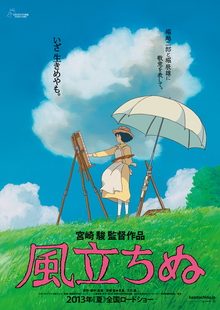
The Wind Rises
Entertainment
6 min read
Updated By: History Editorial Network (HEN)
Published:
Updated:
The Wind Rises (2013) is a poignant historical drama and the final directorial work (at the time) of Hayao Miyazaki for Studio Ghibli. Loosely based on the life of Jiro Horikoshi, the designer of Japan’s WWII-era Mitsubishi A5M and A6M Zero fighter planes, the film is a deeply personal meditation on creativity, beauty, loss, and moral compromise. Blending fact and fiction, it follows Jiro from childhood to adulthood as he dreams of flight, studies aeronautical engineering, and grapples with the heartbreaking reality that his artistic passion will be used for war. Woven into this is a tender romantic subplot involving Naoko Satomi, a young woman suffering from tuberculosis, whose doomed love with Jiro becomes the emotional soul of the film.
Visually, The Wind Rises is stunning—rendered in Studio Ghibli’s signature hand-drawn style but with a more subdued palette and grounded realism than their fantasy works. The dream sequences, including conversations with Italian aircraft designer Giovanni Caproni, are surreal and metaphorical, representing Jiro’s inner turmoil. Joe Hisaishi’s melancholic score, particularly the theme “A Journey (Voyage),” captures the film’s sense of longing and bittersweet wonder.
Financially, the film was a major success. It grossed over $136 million worldwide, becoming the highest-grossing Japanese film of 2013. Despite being a slower, more adult-oriented story than other Ghibli works, its themes resonated with a wide audience, especially in Japan where Jiro is a controversial yet iconic figure. Internationally, the film drew strong attention for its anti-war subtext and philosophical tone.
Critically, The Wind Rises was acclaimed for its emotional maturity, artistry, and unflinching introspection. It holds an 89% rating on Rotten Tomatoes and a Metacritic score of 83, with many praising Miyazaki’s courage in tackling such morally complex subject matter in what was announced as his final film. Some controversy surrounded the film’s portrayal of Jiro as an idealist detached from the real-world consequences of his designs, but Miyazaki clarified that the film was about "the cost of pursuing beauty" and the tragic nature of living through turbulent times.
The film was nominated for the Academy Award for Best Animated Feature, though it lost to Frozen, and won the Japan Academy Prize for Animation of the Year. It was also awarded Best Animated Film by the New York Film Critics Circle and the National Board of Review.
The legacy of The Wind Rises is as much about Miyazaki himself as it is about the film’s subject. It stands as a reflective farewell to animation, creation, and life under the weight of history—until Miyazaki’s return a decade later. It remains one of the most mature and emotionally profound films in the Studio Ghibli catalog.
Primary Reference
Antología Studio Ghibli: Volumen 2

Explore the Life Moments of
 AI Twin