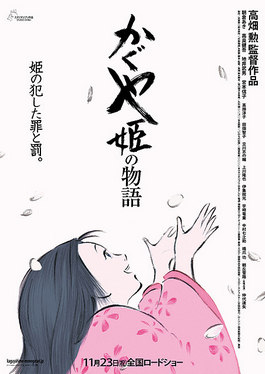
The Tale of the Princess Kaguya
Entertainment
6 min read
Updated By: History Editorial Network (HEN)
Published:
The Tale of the Princess Kaguya (2013) is a Japanese animated historical fantasy drama directed by Isao Takahata and produced by Studio Ghibli. Based on The Tale of the Bamboo Cutter—one of Japan's oldest surviving folktales—the film follows a bamboo cutter who discovers a tiny girl inside a glowing bamboo stalk. He and his wife raise her as their daughter, believing she is a divine blessing. The girl, named Kaguya, rapidly grows into a beautiful young woman and is soon thrust into a life of nobility, suitors, and societal expectations. But Kaguya harbors a sorrowful secret about her true origin, and her desire for freedom and simplicity clashes with the life imposed upon her.
The film is visually striking, employing a hand-drawn watercolor style that mimics traditional Japanese brush painting. Takahata deliberately eschews digital gloss in favor of expressive linework and a flowing, ethereal aesthetic. The animation is minimalist but emotionally intense, with particular scenes—such as Kaguya’s escape through the woods—displaying raw, kinetic energy rarely seen in animation.
At the box office, The Tale of the Princess Kaguya earned ¥2.47 billion in Japan (approx. $23.7 million USD) and grossed around $27 million worldwide. While not a commercial juggernaut by Ghibli standards, its performance was respectable given its unconventional style and subdued marketing. Its international appeal was boosted by strong festival showings and critical reception.
Critically, the film received universal acclaim. It holds a 100% score on Rotten Tomatoes and a Metacritic score of 89, with reviewers praising its poetic storytelling, emotional depth, and visual innovation. Many considered it a late-career triumph for Isao Takahata, co-founder of Studio Ghibli and director of Grave of the Fireflies. The film’s exploration of beauty, femininity, nature, and existential sorrow resonated with audiences across cultures.
The Tale of the Princess Kaguya was nominated for Best Animated Feature at the 87th Academy Awards in 2015 (it lost to Big Hero 6) and won multiple awards, including Best Animation at the Japan Academy Prize and Best Animated Feature at the Asia Pacific Screen Awards. It was also lauded at the Annie Awards and received the Jury Prize at the Annecy International Animated Film Festival.
The film is now widely considered a masterpiece and one of Studio Ghibli’s most artistically daring works. It was Takahata’s final film before his death in 2018, making it a powerful swan song—a film of haunting beauty, quiet rebellion, and emotional profundity that lingers long after the credits roll.
Primary Reference
Kaguya-hime no Monogatari: Credit" かぐや姫の物語 クレジット

Explore the Life Moments of
 AI Twin