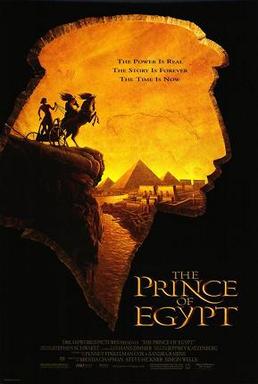
The Prince of Egypt
Entertainment
7 min read
Updated By: History Editorial Network (HEN)
Published:
Updated:
The Prince of Egypt (1998) is a visually grand and emotionally resonant animated musical drama produced by DreamWorks Animation and directed by Brenda Chapman, Steve Hickner, and Simon Wells. The film adapts the biblical story of Moses, tracing his journey from Egyptian prince to Hebrew prophet. Raised as the adopted brother of Pharaoh Rameses II, Moses is forced to confront his true heritage and ultimately leads the Hebrew slaves out of Egypt, challenging his former brother in a deeply personal and spiritual conflict. Balancing epic spectacle with intimate emotional arcs, the film reimagines a foundational religious narrative for a global audience without simplifying its moral complexity.
Visually, the film is striking for its blend of traditional hand-drawn animation and cutting-edge CGI, especially in large-scale sequences like the parting of the Red Sea and the ten plagues of Egypt. The animation style takes inspiration from ancient Middle Eastern art and architecture, resulting in a rich, cinematic aesthetic. The musical score, composed by Hans Zimmer, is paired with songs by Stephen Schwartz, including iconic numbers like “Deliver Us” and the Oscar-winning “When You Believe.” The voice cast includes Val Kilmer (Moses), Ralph Fiennes (Rameses), Michelle Pfeiffer, Sandra Bullock, Jeff Goldblum, and Patrick Stewart, among others—lending gravitas and nuance to the roles.
With a production budget of around $70 million, The Prince of Egypt was a commercial success, grossing over $218 million worldwide, making it the highest-grossing non-Disney traditionally animated film at the time. It performed especially well in both North America and international markets, establishing DreamWorks as a legitimate rival to Disney in the animated feature space.
Critically, the film was praised for its ambition, maturity, and artistry. It holds a 79% rating on Rotten Tomatoes and a Metacritic score of 64. Reviewers highlighted its respect for the source material, its powerful music, and its bold visual storytelling. While some critics noted that it softened certain aspects of the original biblical story, many commended it for introducing a timeless narrative to younger audiences without condescension.
The Prince of Egypt won the Academy Award for Best Original Song for “When You Believe,” and received nominations for Best Original Score and several Annie Awards. It also earned recognition from religious, musical, and animation circles, becoming a rare animated feature celebrated across such diverse spheres.
The legacy of The Prince of Egypt is significant. It marked a turning point in animation, proving that faith-based stories could be told with sophistication, visual beauty, and emotional weight. The film continues to be shown in classrooms and religious settings, and its stage adaptation has also enjoyed international success. For DreamWorks, it laid the foundation for the studio’s early artistic credibility, years before franchises like Shrek or How to Train Your Dragon came to define its identity.

Explore the Life Moments of
 AI Twin