Tekkonkinkreet
6 min read
Updated By: History Editorial Network (HEN)
Published:
Updated:
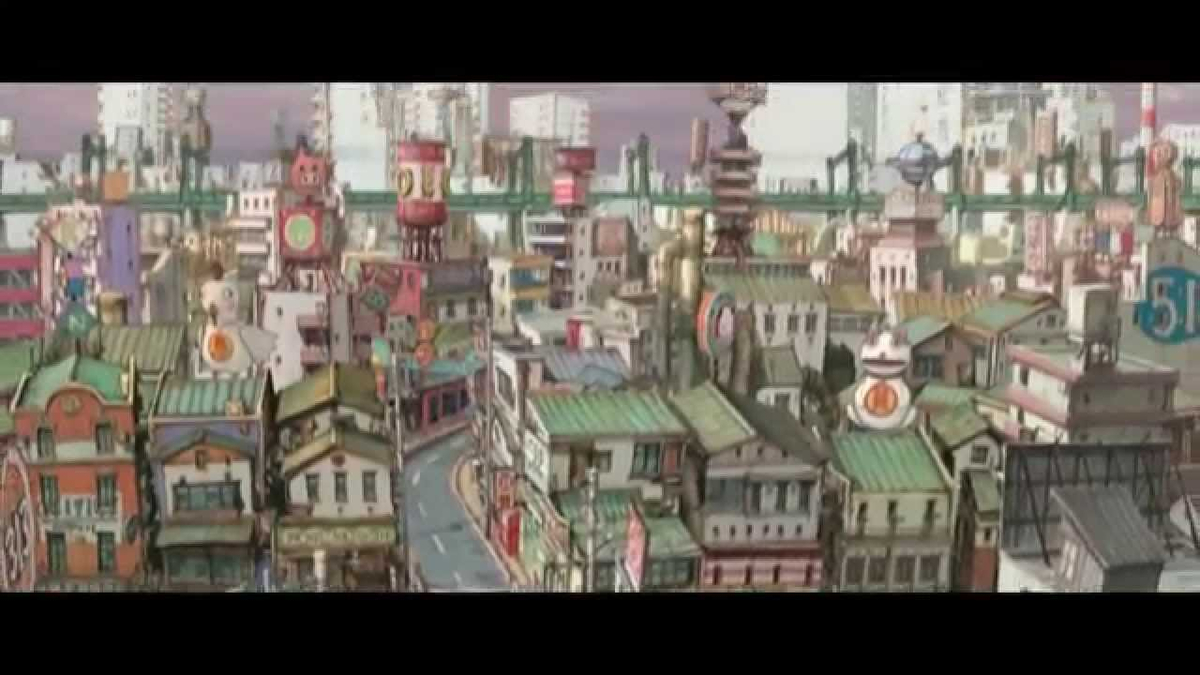
Tekkonkinkreet (2006) is a Japanese animated psychological action drama directed by Michael Arias and produced by Studio 4°C, adapted from the manga Black & White by Taiyō Matsumoto. Set in the chaotic, decaying urban sprawl of Treasure Town, the film follows two street orphans: Black, the older and more violent of the two, and White, a naive and dreamlike boy. Together, they try to defend their city from invading yakuza and a sinister redevelopment project. As outside forces threaten to destroy their home, the bond between Black and White is pushed to its breaking point, blurring the lines between childhood innocence and violent survival.
Visually, Tekkonkinkreet is a stunning collision of gritty realism and surreal abstraction. The animation features densely layered backgrounds, frenetic camera angles, and fluid movement, all drawn in a style that melds Eastern and Western influences. Treasure Town pulses with life and decay—simultaneously grotesque and beautiful. The dream sequences and psychological breakdowns are illustrated with hallucinatory intensity, matching the inner turmoil of its characters. The score by British electronic duo Plaid adds a haunting, glitchy texture to the emotional rhythm of the story, underscoring its fusion of action and introspection.
With a budget of approximately $4 million, the film was a moderate box office performer, grossing around $1.6 million worldwide, but it quickly gained recognition on the festival circuit and home video markets. Its unconventional storytelling and dense visuals made it more popular with international and arthouse audiences than with mainstream anime fans.
Critically, Tekkonkinkreet received widespread acclaim. It holds a 76% rating on Rotten Tomatoes and a Metacritic score of 65, with critics praising its emotional depth, visual experimentation, and thematic weight. The film was noted for its exploration of duality—order versus chaos, light versus darkness, childhood versus adulthood—through its central characters. While its nonlinear pacing and surreal visuals divided some viewers, many regarded it as a bold and visionary work of art.
Tekkonkinkreet won the Japan Academy Prize for Animation of the Year and the Mainichi Film Award for Best Animation Film. It also premiered internationally at the Berlin International Film Festival, where it was nominated for the Golden Bear, and won awards at the Fantasia Festival and Los Angeles Film Critics Association Awards.
The legacy of Tekkonkinkreet is significant in the evolution of adult animation. It was the first major anime film directed by a non-Japanese filmmaker, Michael Arias, who brought a unique cross-cultural perspective that elevated the source material into something transcendent. It remains one of the most visually ambitious and thematically mature animated films of the 2000s—a cult classic revered for its fusion of brutal urban storytelling and poetic introspection.
Primary Reference
Tekkonkinkreet

Explore the Life Moments of
 AI Twin