Persepolis
Entertainment
6 min read
Updated By: History Editorial Network (HEN)
Published:
Updated:
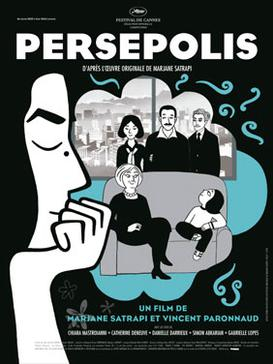
Persepolis (2007) is a French-Iranian animated biographical drama based on Marjane Satrapi’s best-selling graphic novel of the same name. Co-directed by Satrapi and Vincent Paronnaud, the film tells the coming-of-age story of Marjane, a spirited Iranian girl growing up during the 1979 Islamic Revolution and the Iran-Iraq War. As the political climate becomes increasingly oppressive, her outspoken nature and rebellious attitude clash with authoritarian rule, forcing her into exile in Europe. The narrative follows her emotional and ideological struggles as she navigates culture shock, personal loss, identity crises, and the lasting trauma of war and exile.
Visually, Persepolis is entirely rendered in striking black-and-white 2D animation, mirroring the graphic novel’s minimalist, expressionistic style. This stark aesthetic enhances the film’s emotional impact and universal themes, allowing viewers to focus on Marjane’s internal journey rather than being distracted by visual excess. The animation is fluid and poetic, shifting effortlessly between humor, tragedy, surreal memory, and raw political commentary. The voice cast includes Chiara Mastroianni as Marjane, and Catherine Deneuve and Danielle Darrieux as her mother and grandmother in the French version, adding emotional weight to the film’s domestic and ideological tensions.
Persepolis was a critical triumph and an international festival darling. It premiered at the 2007 Cannes Film Festival, where it won the Jury Prize and received a 15-minute standing ovation. It went on to earn a Best Animated Feature nomination at the 80th Academy Awards, making it one of the rare non-English-language films to be recognized in that category. It also won the César Award for Best First Film and Best Adaptation, and the Los Angeles Film Critics Association Award for Best Animation, among others.
At the box office, Persepolis performed modestly but respectably, grossing around $22.9 million worldwide on a relatively low budget. Its strongest returns came from France and other European countries, where its political themes and literary origins had greater resonance. In the U.S., the film was distributed by Sony Pictures Classics and received a limited release but enjoyed strong support from critics and arthouse audiences.
The film's legacy is considerable. Persepolis is widely regarded as a milestone in animated cinema—not only for its aesthetic courage but for proving that animation can be a vehicle for serious autobiographical and political storytelling. It broke genre and cultural boundaries, offering an unflinching look at Iran’s recent history through a personal, feminist lens. Today, it is taught in universities, screened in human rights forums, and cited as one of the most important animated films of the 21st century.
Primary Reference
Persepolis (2007)

Explore the Life Moments of
 AI Twin