Liz and the Blue Bird
Entertainment
6 min read
Updated By: History Editorial Network (HEN)
Published:
Updated:
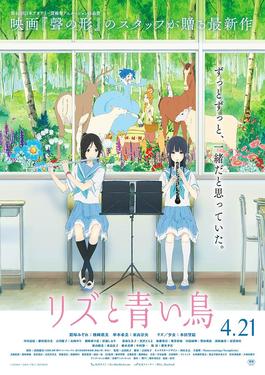
iz and the Blue Bird (2018) is a Japanese animated drama directed by Naoko Yamada and written by Reiko Yoshida, produced by Kyoto Animation as a spinoff of the Sound! Euphonium series. The film follows high schoolers Nozomi Kasaki and Mizore Yoroizuka, members of their school’s wind ensemble, as they prepare to perform the melancholic piece “Liz and the Blue Bird.” Their deep friendship and emotional interdependence are mirrored in the music’s narrative of a blue bird and its owner, prompting the pair to confront growing distance and personal growth in an intimate portrait of teenage bonds.
Visually, the film is a quiet masterpiece. Kyoto Animation employs soft, textured hand-drawn backgrounds and subtle character animation, allowing small gestures—a glance, a sigh—to carry emotional weight. The gentle use of watercolors, diffused lighting, and musical timing immerse viewers in a world where internal feelings are externalized through cinematic detail. The classical score—centered on oboe and flute—underscores silence and breathing, elevating the narrative without a single line of dialogue about the central theme.
Created on a typical mid-tier animation budget, Liz and the Blue Bird earned approximately $2.27 million worldwide, with festival screenings and a focused theatrical release in Japan and select international markets. While modest in scale, it achieved strong critical and audience resonance, particularly among fans of contemplative anime.
Critics widely praised the film for its emotional subtlety and aesthetic poetry. It holds a 100% rating on Rotten Tomatoes, with reviewers lauding its ability to evoke deep feeling through minimalism. Many highlighted the way the film uses musical metaphor and visual nuance to explore separation, empathy, and self-discovery.
The film received nominations and awards at animation festivals, including an Excellence Award at the Japan Media Arts Festival and industry praise for its direction, character performance, and sound design. Though it didn’t vie for mainstream academy awards, it asserted Kyoto Animation’s strengths in character-driven storytelling and visual sensitivity.
The legacy of Liz and the Blue Bird lies in its quiet clarity—showing that animation, when aligned with music and empathy, can capture the tender, ephemeral core of human relationships. It is regarded as one of the most emotionally refined anime films of the 2010s, influencing creators to pursue introspective, music-centered narratives in animation.
Primary Reference
Liz and the Blue Bird (2018) box office

Explore the Life Moments of
 AI Twin