Interstella 5555: The 5tory of the 5ecret 5tar 5ystem
Entertainment
6 min read
Updated By: History Editorial Network (HEN)
Published:
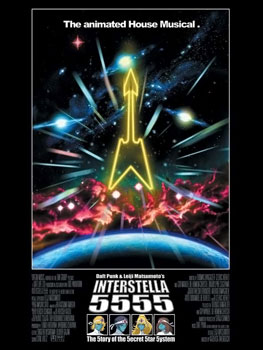
Interstella 5555: The 5tory of the 5ecret 5tar 5ystem (2003) is a feature-length animated sci-fi musical film that serves as a visual realization of Daft Punk’s 2001 album Discovery. Directed by Kazuhisa Takenouchi and supervised by legendary anime creator Leiji Matsumoto (of Space Battleship Yamato and Galaxy Express 999 fame), the film is a French-Japanese collaboration that blends house music, space opera, and classic 1970s/80s anime aesthetics into a unique, wordless narrative experience. The story follows an alien pop band that is kidnapped from their home planet by an evil music executive who disguises them as humans to exploit them on Earth. As their fame grows, a lone space hero sets out to rescue them and uncover the sinister plan behind the music industry’s corporate machine.
Told entirely without dialogue, Interstella 5555 relies on its soundtrack—played in full from Discovery—to drive the plot. Tracks like “One More Time,” “Digital Love,” “Harder, Better, Faster, Stronger,” and “Something About Us” become not just musical numbers but chapters in the emotional arc of the story. The animation, designed in Leiji Matsumoto’s signature style, is vibrant, kinetic, and emotive, with a heavy dose of nostalgia for vintage space anime.
The film had a limited theatrical release and was mostly distributed through home video and music channels. Box office numbers were minimal due to its niche appeal and nontraditional format, but Interstella 5555 quickly gained cult status. It became a favorite among fans of both anime and electronic music, and was often cited as a pioneering work in music video storytelling. The project was considered experimental at the time—a full concept album turned into a feature-length film, without dialogue or standard plot exposition.
Critically, the film was well-received. Though it didn’t receive mainstream awards, it was praised for its visual ambition, coherence, and how perfectly it married music and animation. Many reviewers highlighted it as one of the most successful album-to-film adaptations ever made. It holds a high audience rating on platforms like IMDb and Rotten Tomatoes, and retrospectives often hail it as an underrated gem of early-2000s animation.
The legacy of Interstella 5555 is significant. It helped redefine how music and animation could work together outside the bounds of traditional narrative cinema. It also cemented Daft Punk’s status as multimedia artists, not just musicians. The film is still widely regarded as a cult classic and a bold creative experiment that succeeded on its own unique terms.
Primary Reference
Interstella 5555: The 5tory of the 5ecret 5tar 5ystem

Explore the Life Moments of
 AI Twin