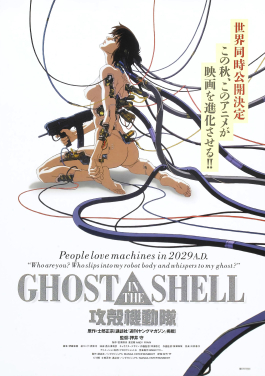
Ghost in the Shell
Entertainment
6 min read
Updated By: History Editorial Network (HEN)
Published:
Updated:
Ghost in the Shell (1995) is a seminal Japanese cyberpunk animated film directed by Mamoru Oshii, based on the manga by Masamune Shirow. Set in the year 2029, the film follows Major Motoko Kusanagi, a cyborg working for Public Security Section 9, a counter-cyberterrorism unit in a technologically advanced society where human consciousness can be transferred into cybernetic bodies. The story centers around the hunt for the Puppet Master, a mysterious hacker capable of ghost-hacking—taking control of cyber-enhanced individuals by invading their minds. As Kusanagi delves deeper into the case, she confronts existential questions about identity, consciousness, and what it means to be human.
Visually, Ghost in the Shell is a technical and artistic masterpiece. Combining traditional hand-drawn animation with then-pioneering digital effects, it delivers a haunting, richly detailed vision of a futuristic metropolis inspired by Hong Kong's architecture and Blade Runner-style aesthetics. The animation is fluid and precise, often blending slow, philosophical sequences with brief bursts of brutal action. Kenji Kawai’s eerie score—especially the choral opening theme—adds to the film’s mysterious and meditative tone.
While it had a modest box office performance in Japan, earning approximately $10 million worldwide, its real success came through international acclaim and home video. In the West, especially the U.S. and Europe, Ghost in the Shell became a cult classic and was a key title in popularizing anime among adult audiences during the 1990s. It was distributed by Manga Entertainment and became a staple on DVD shelves for sci-fi and anime fans alike.
Critically, the film was hailed for its bold philosophical themes, stunning animation, and mature tone. It holds a 95% rating on Rotten Tomatoes and is frequently cited as one of the most important animated and sci-fi films ever made. Ghost in the Shell has been praised for influencing major filmmakers, most notably The Wachowskis, who cited it as a direct inspiration for The Matrix. Its reflections on artificial intelligence, consciousness, and digital identity remain strikingly relevant.
Although the original film didn't win many mainstream awards upon release, its legacy is enormous. It spawned an entire franchise, including multiple TV series (Stand Alone Complex), a sequel (Innocence, 2004), and a controversial live-action adaptation in 2017. Its impact can be felt across global cinema, animation, and cyberpunk media, and it continues to be studied and referenced for its blend of high-concept sci-fi, visual sophistication, and haunting existentialism.
Primary Reference
Production I.G [WORK LIST]

Explore the Life Moments of
 AI Twin