Coco
Entertainment
7 min read
Updated By: History Editorial Network (HEN)
Published:
Updated:
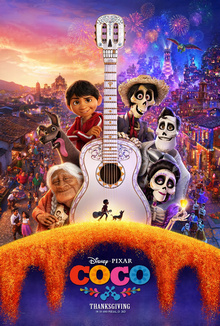
Coco (2017) is a vibrant and emotionally resonant animated film produced by Pixar Animation Studios and released by Walt Disney Pictures. Directed by Lee Unkrich and co-directed by Adrian Molina, the story centers on Miguel Rivera, a 12-year-old boy in Mexico who dreams of becoming a musician despite his family’s strict generational ban on music. On Día de los Muertos (Day of the Dead), Miguel finds himself magically transported to the Land of the Dead, where he seeks out his great-great-grandfather—a legendary musician—for a family blessing to return to the living world and follow his passion. Along the way, he uncovers buried family secrets, reshapes his understanding of legacy, and learns the power of remembrance and forgiveness.
Visually, Coco is a triumph of color and imagination. Pixar’s depiction of the Land of the Dead is a towering, luminescent metropolis filled with floating bridges of marigold petals, festive skeletons, and richly detailed architecture inspired by Mexican culture. The character designs are expressive and respectful, and the film’s score—composed by Michael Giacchino—is deeply rooted in traditional Mexican musical forms. The original songs, especially “Remember Me” by Kristen Anderson-Lopez and Robert Lopez, play a central role in both the plot and emotional core of the film.
Coco was a box office smash, grossing over $814 million worldwide against a production budget of approximately $175–200 million. It became the highest-grossing film in Mexico’s history and performed strongly in international markets, including China, where it unexpectedly found a massive audience. The film’s success was driven not only by Pixar’s global appeal but also by its cultural authenticity and resonance with Latino communities.
Critics universally praised Coco, which holds a 97% rating on Rotten Tomatoes and a Metacritic score of 81. It was celebrated for its respectful portrayal of Mexican traditions, its emotional storytelling, and its ability to address themes like death, family, and memory in a way that’s accessible to children and moving for adults. Many reviewers singled out the film’s final act—particularly the emotionally devastating scene involving Miguel and his great-grandmother Coco—as one of Pixar’s most powerful moments.
The film received widespread recognition during awards season. It won two Academy Awards: Best Animated Feature and Best Original Song (“Remember Me”), and also took home a Golden Globe, BAFTA, and Critics' Choice Award in the same categories. At the Annie Awards, it dominated with 11 nominations and 11 wins, including Best Animated Feature, Best Direction, and Best Music.
The legacy of Coco is significant. It not only pushed Pixar to new emotional depths but also set a new standard for cultural representation in mainstream animation. Its success demonstrated that culturally specific stories could have universal impact, paving the way for more diverse narratives in Hollywood animation. Today, Coco is regarded as one of Pixar’s finest achievements—technically dazzling, emotionally rich, and deeply human.
Primary Reference
2017 Feature Film Study

Explore the Life Moments of
 AI Twin