Azur & Asmar: The Princes' Quest
Entertainment
6 min read
Updated By: History Editorial Network (HEN)
Published:
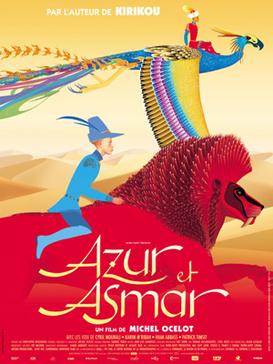
Azur & Asmar: The Princes’ Quest (2006) is a French animated fantasy film written and directed by Michel Ocelot, best known for Kirikou and the Sorceress. The film tells the story of Azur, the fair-skinned son of a nobleman, and Asmar, the dark-skinned son of his nurse, Jenane. Though raised together like brothers, social divisions eventually separate them. Years later, both young men set out on a mythical quest to rescue the legendary Djinn-fairy, each determined to be the one who finds and frees her. Their paths cross in a richly imagined North African-inspired world where themes of brotherhood, cultural clash, and unity unfold.
The animation style is distinctive, using vivid color palettes, geometric compositions, and ornamental design influenced by Islamic art and medieval Persian miniatures. The film avoids outlines or shading, giving it a flat yet richly textured aesthetic. Multilingual dialogue—including French, Arabic, and gibberish-like invented languages—adds authenticity and a sense of multicultural fusion. It’s a visual and thematic celebration of diversity, tolerance, and equality, told through a classic fairy tale structure.
Financially, Azur & Asmar had a moderate box office run, grossing approximately $15 million worldwide, mostly in France and other European markets. It was less known in the U.S. due to limited distribution, but it enjoyed a strong reception in the Middle East and North Africa, where its respectful portrayal of Arabic culture stood out. Despite its limited commercial footprint, the film found a loyal audience through festivals, educational use, and home media.
Critically, the film was praised for its bold visuals, cross-cultural narrative, and strong moral undertones. It holds an 83% rating on Rotten Tomatoes and was described by critics as “stunning,” “ambitious,” and “visually mesmerizing.” Michel Ocelot was lauded for pushing the boundaries of children’s animation by creating a story that does not condescend and instead challenges young viewers with real-world themes of race, religion, and societal structure.
Azur & Asmar was nominated for several prestigious awards, including Best European Film at the European Film Awards, and won Best Feature Film at the Chicago International Children's Film Festival. It was also selected for the Directors' Fortnight at the 2006 Cannes Film Festival, a rare honor for an animated film.
The film’s legacy lies in its bold artistic direction and humanist message. It is considered a standout work in European animation, frequently used in classrooms for its cultural relevance and visual storytelling. Azur & Asmar remains one of Michel Ocelot’s most powerful and visually sophisticated films—an ode to unity in a world too often divided.
Primary Reference
Azur & Asmar: The Princes' Quest press pack

Explore the Life Moments of
 AI Twin