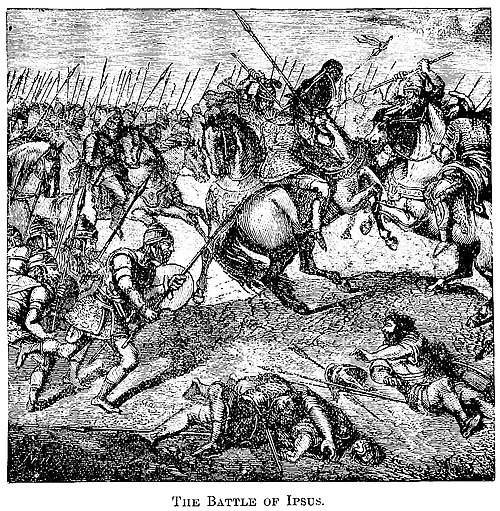
Battle of Ipsus
Greece
Military
3 min read
Updated By: History Editorial Network (HEN)
Published:
Updated:
The Battle of Ipsus was a pivotal conflict in the series of wars known as the Wars of the Diadochi, which followed the death of Alexander the Great. Antigonus I Monophthalmus, one of Alexander's generals, sought to consolidate his power and expand his territory by attacking rival successor kingdoms. This aggressive expansion prompted a coalition of his adversaries, including Lysimachus and Seleucus, who united their forces against him. The battle took place in Phrygia, where Antigonus faced a formidable alliance that ultimately led to his defeat. The outcome of the battle was significant, as it marked a turning point in the power dynamics of the Hellenistic world. Antigonus was killed during the conflict, which resulted in the fragmentation of his empire and the rise of the Seleucid Empire under Seleucus I Nicator. The battle not only altered the territorial boundaries of the successor states but also set the stage for the eventual dominance of the Seleucid and Ptolemaic kingdoms in the region. Following the battle, Antigonus's son, Demetrius, was captured and spent years in Seleucid captivity, while another son, Antigonus II, later reclaimed the Macedonian throne, illustrating the long-lasting impact of the battle on the lineage and power of the Antigonid dynasty.
#mooflife
#MomentOfLife
#BattleOfIpsus
#AntigonusI
#DiadochiWars
#HellenisticHistory
#SeleucidEmpire
Primary Reference
https://en.wikipedia.org/wiki/Battle_of_Ipsus

Explore the Life Moments of
 AI Twin