The Peace of Nicias
Athens & Sparta (Lacedaemon), Ancient Greece, Greece
Ancient Greece
Military
8 min read
Updated By: History Editorial Network (HEN)
Published:
Updated:
Peace of Nicias Signed (March 421 BCE) - Athens and Sparta Agree to a 50-Year Truce: The Peace of Nicias was a treaty negotiated by the Athenian general Nicias following the deaths of Cleon and Brasidas, who were key advocates for war from Athens and Sparta, respectively. This treaty aimed to establish a temporary cessation of hostilities between the two city-states during the prolonged Peloponnesian War. The negotiations were significant as they marked a shift in the conflict dynamics, allowing both sides to regroup and reassess their military strategies. The treaty was intended to last for fifty years, but it was fraught with challenges from the outset. The underlying tensions and unresolved issues from previous conflicts persisted, undermining the treaty's effectiveness. The peace was further complicated by the ambitions of Athens, which sought to expand its influence in the region, particularly through military expeditions. This ambition culminated in a major naval campaign aimed at Sicily, which ultimately led to renewed hostilities and the eventual breakdown of the peace agreement. The failure of the Peace of Nicias illustrates the difficulties of maintaining long-term peace in a context marked by rivalry and competing interests among powerful city-states. The treaty's collapse had significant repercussions, leading to further military engagements and a protracted conflict that would continue to shape the political landscape of ancient Greece.
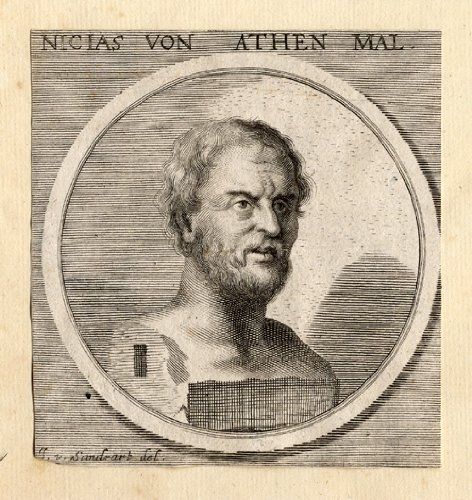
The Peace of Nicias, signed in March 421 BCE (Spring 421 BCE), was a peace treaty intended to end the first phase of the Peloponnesian War (the Archidamian War) between Athens and Sparta. Named after the Athenian general and statesman Nicias, who was its chief negotiator, the treaty was designed to last for 50 years.
Context and Motivation:
By 421 BCE, both major powers were exhausted after ten years of continuous warfare:
• Athens had suffered from a devastating plague and recent military setbacks, including the loss of the strategic city of Amphipolis.
Sparta was anxious to recover high-ranking prisoners captured at the Battle of Sphacteria and faced the expiration of a truce with its rival, Argos.
• Leading Advocates: The deaths of the primary pro-war leaders - the Spartan general Brasidas and the Athenian politician Cleon - at the Battle of Amphipolis (422 BCE) removed the main obstacles to negotiation.
Key Terms of the Treaty
The treaty aimed to restore the status quo ante bellum (the situation before the war) with several specific provisions:
• Territorial Returns: Sparta was to return Amphipolis to Athens, while Athens was to return Pylos and other captured Peloponnesian sites to Sparta.
• Prisoner Exchange: Both sides agreed to release all prisoners of war.
• Religious Freedom: Common shrines and the Oracle at Delphi were to be independent and accessible to all Greeks.
• Defensive Alliance: A separate 50-year alliance was formed between Athens and Sparta, including a clause where Athens pledged to help Sparta suppress Helot (slave) revolts.
Failure and Legacy - The peace was fragile and effectively a "precarious truce" that lasted only about six years:
• Resistance from Allies: Several of Sparta’s key allies - including Corinth, Megara, Boeotia, and Elis - refused to ratify the treaty because it did not address their territorial grievances.
• Non-compliance: Sparta failed to hand over Amphipolis, and in retaliation, Athens refused to return Pylos.
• Rise of Alcibiades: A new generation of Athenian leaders, led by the ambitious Alcibiades, actively worked to undermine the peace by forming a new anti-Spartan alliance with Argos.
• Final Collapse: Hostilities openly resumed with the Battle of Mantinea in 418 BCE and were definitively shattered by the Athenian Sicilian Expedition in 415 BCE.
Note: Treaty oaths and public stelae were tied to major sanctuaries and civic temples, including Athens’ Acropolis and Amyclae in Lacedaemon
#Nicias
#PeaceOfNicias
#AthenianNegotiations
#PeloponnesianWar
#AncientGreece
Primary Reference
Peace of Nicias

Explore the Life Moments of
 AI Twin