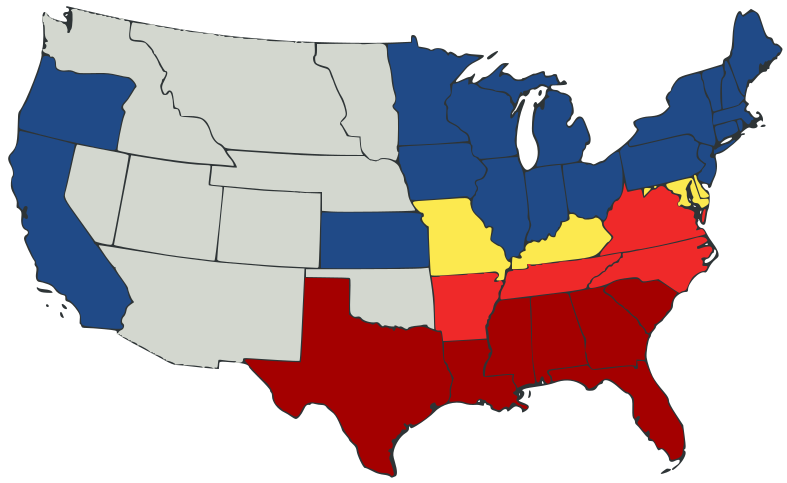
Southern States Secede from the Union
Jackson, Mississippi, United States
American Civil War
Slavery
Southern Secession
4 min read
Updated By: History Editorial Network (HEN)
Published:
Updated:
The secession of Southern states from the Union was primarily driven by the desire to maintain the institution of slavery, a fact that is widely supported by historians today. The political landscape leading to this event was marked by intense debates over the expansion of slavery into new territories, which was crucial for maintaining a balance of power in Congress. Initially, new states were admitted in pairs—one slave and one free—to preserve this balance. However, as free states began to outnumber slave states in terms of eligible voters, tensions escalated. The Southern states feared that the growing anti-slavery sentiment in the North would lead to the abolition of slavery, prompting them to take drastic measures. Mississippi's declaration, which explicitly linked its position to the institution of slavery, exemplifies the motivations behind secession.
In addition to the issue of slavery, other factors contributed to the Southern states' decision to secede. The rise of white Southern nationalism and the desire for autonomy played significant roles. The North's refusal to allow secession was rooted in a commitment to preserving the Union, reflecting a sense of American nationalism. The backdrop of the Civil War included various elements such as partisan politics, the abolitionist movement, and differing views on nullification and secession. Ultimately, while slavery was the primary cause of disunion, the act of secession itself ignited the conflict that would become the Civil War.
#mooflife
#MomentOfLife
#SouthernStates
#Secession
#CivilWar
#Slavery
#AmericanHistory
Primary Reference
Mississippi Secession Gulf Islands National Seashore

Explore the Life Moments of
 AI Twin