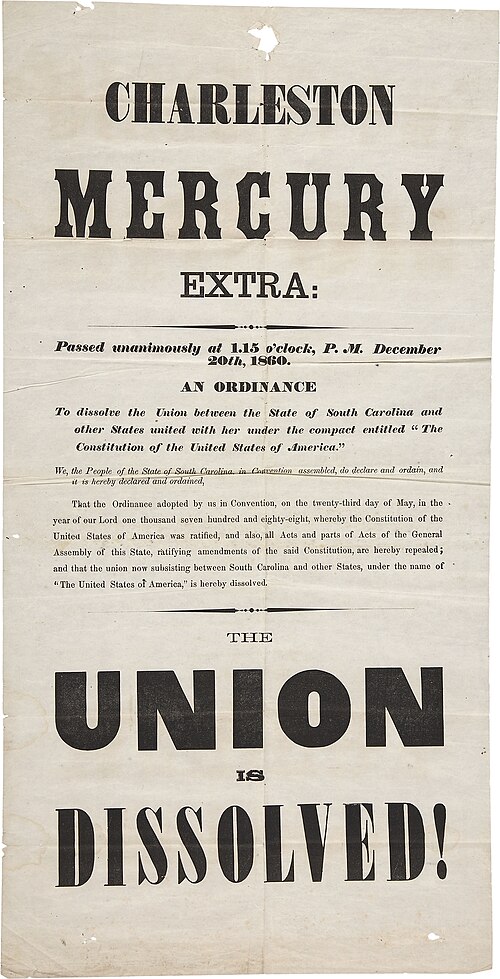
South Carolina Secedes from the Union
Charleston, United States
American Civil War
Secession
States' Rights
4 min read
Updated By: History Editorial Network (HEN)
Published:
Updated:
South Carolina's decision to secede from the Union was rooted in the contentious issue of states' rights, particularly concerning the institution of slavery. The state's convention, composed of delegates who represented the interests of slave owners, unanimously voted to adopt a secession declaration. This declaration articulated the belief that states had the right to govern themselves and make decisions independent of federal authority. A significant point of contention was the perceived failure of Northern states to uphold the federal Fugitive Slave Act, which mandated the return of escaped slaves to their owners. South Carolina's leaders argued that this resistance undermined the rights of slave owners and threatened the economic and social order of the South, which was heavily reliant on slavery for its agricultural economy.
The impact of South Carolina's secession was profound, as it marked the beginning of a series of events that would lead to the American Civil War. The secession was not an isolated incident; it set a precedent that encouraged other Southern states to follow suit, ultimately leading to the formation of the Confederate States of America. This escalation highlighted the deep divisions within the country over issues of slavery and states' rights. The secession also prompted a strong response from the federal government, which viewed it as a challenge to national unity and authority. The conflict that ensued would reshape the nation, leading to significant social, political, and economic changes, including the eventual abolition of slavery and the redefinition of federal and state relationships.
#mooflife
#MomentOfLife
#SouthCarolina
#Secession
#CivilWar
#States'Rights
#FugitiveSlaveAct
Primary Reference
South Carolina Declaration of Secession

Explore the Life Moments of
 AI Twin