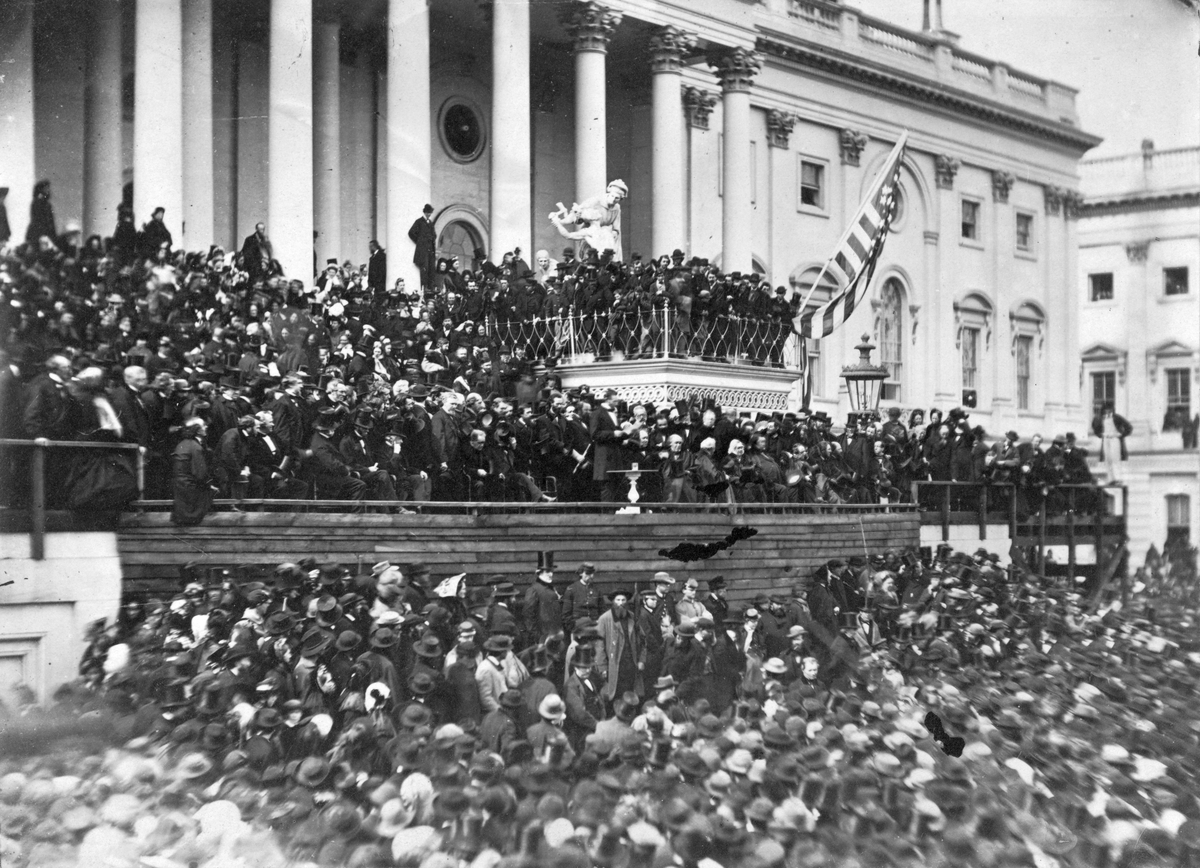
Abraham Lincoln's First Inaugural Address
Washington, United States
Politics
Law
4 min read
Updated By: History Editorial Network (HEN)
Published:
Updated:
Abraham Lincoln's First Inaugural Address marked a pivotal moment in American history as he took office amid rising tensions between the Union and the Confederacy. In this address, Lincoln emphasized the Constitution as a binding contract, asserting that secession by Southern states was legally invalid. He aimed to reassure the Southern states that he did not intend to invade them or disrupt the institution of slavery where it was already established. Instead, he focused on the preservation of the Union and the importance of federal authority over federal property. Lincoln's commitment to maintaining the Union was clear, as he stated he would use force if necessary to protect federal assets, which were increasingly threatened by secessionist movements. This address was not only a declaration of his intentions but also a call for unity and reconciliation, urging Americans to come together despite their differences.
The impact of Lincoln's address was profound, as it set the tone for his presidency and the Civil War that followed. His words were aimed at both the North and the South, attempting to bridge the growing divide. The address highlighted the constitutional crisis facing the nation and underscored the complexities of governance in a time of conflict. Lincoln's insistence on the legality of the Union and the unconstitutionality of secession would become central themes throughout his presidency. The address also reflected the broader societal issues of the time, including the contentious debates over states' rights and slavery. Ultimately, Lincoln's First Inaugural Address served as a foundational statement of his administration's goals and the challenges that lay ahead in preserving the Union.
#mooflife
#MomentOfLife
#AbrahamLincoln
#FirstInauguralAddress
#CivilWar
#Union
#Constitution
Primary Reference
Abraham Lincoln's first inaugural address

Explore the Life Moments of
 AI Twin