Einstein's Gravitational Lensing Theory: Influential Work in Astrophysics and Science History
German
Science
Research
3 min read
Updated By: History Editorial Network (HEN)
Published:
Updated:
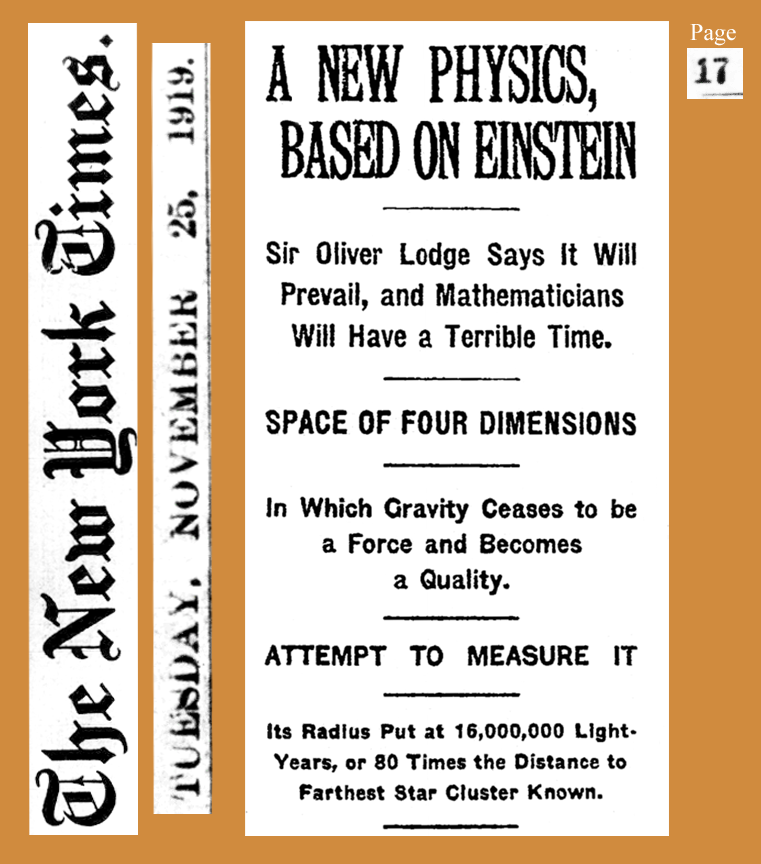
Albert Einstein addressed the scientific community by publishing 'On the Influence of Gravitation on the Propagation of Light.' This work presented the concept that light from a distant star would bend when it passes near a massive object like the sun—termed gravitational lensing. Einstein theorized that massive bodies cause a curvature in space-time, affecting the path of light. This prediction was an essential extension of his equivalence principle, which suggested that gravitational mass and inertial mass are equivalent.
Einstein's predictions regarding gravitational lensing set the path for empirical validation. The foundations he laid influenced subsequent observations and experiments, including the famous solar eclipse expedition led by Sir Arthur Eddington. This expedition provided evidence supporting Einstein's general theory of relativity, solidifying its acceptance among the scientific community.
Einstein's seminal work contributed significantly to astrophysics, cosmology, and the overall understanding of gravitational fields. It paved the way for future research, including the identification of complex astronomical phenomena such as black holes and the large-scale structure of the cosmos.
#MoofLife #Einstein #GravitationalLensing #Astrophysics #ScienceHistory
Explore the Life Moments of
 AI Twin