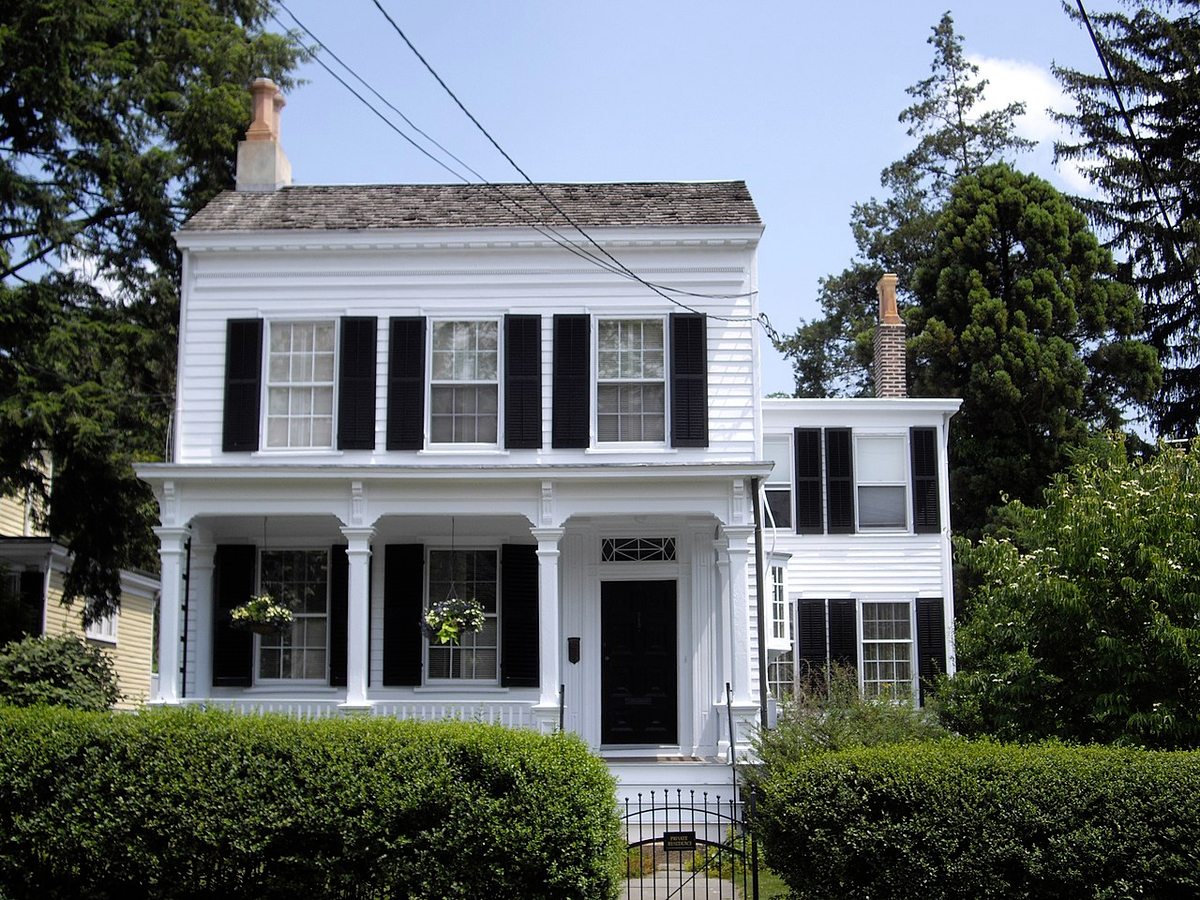
Albert Einstein's Residence in Princeton: A National Historic Landmark.
German
Science
4 min read
Updated By: History Editorial Network (HEN)
Published:
Updated:
Albert Einstein moved into his residence in Princeton, New Jersey, which later gained recognition as a National Historic Landmark. This relocation was a significant development in his life and career. The house became his home and a center for his scientific inquiries and intellectual exchanges.
Princeton at that time was already a hub of academic and scientific activity, largely due to Princeton University and the Institute for Advanced Study, where Einstein held a position. Einstein's immigration to the United States marked a transition from his earlier years in Europe, where he had developed his groundbreaking work in physics, including the theory of relativity.
Before moving to Princeton, Einstein had accepted a position at the Institute for Advanced Study, which enabled him to continue his work in theoretical physics without the pressures of teaching or administrative duties. His residence became a focal point for scientific discourse and was visited by many contemporaries and admirers.
The house itself is a tangible piece of history, representing not only Einstein's personal life but also his enduring contributions to science. It stands as a testament to his legacy and the rich intellectual environment of Princeton. Eventually, it was designated a National Historic Landmark, ensuring its preservation for future generations to appreciate and study.
#AlbertEinstein #Physics #Princeton #NationalHistoricLandmark #InstituteForAdvancedStudy #ScientificLegacy #HistoricHomes #MoofLife
Explore the Life Moments of
 AI Twin