Albert Einstein's General Theory of Relativity: Revolutionizing Gravity and Reshaping Scientific Thought.
German
Science
Physics
4 min read
Updated By: History Editorial Network (HEN)
Published:
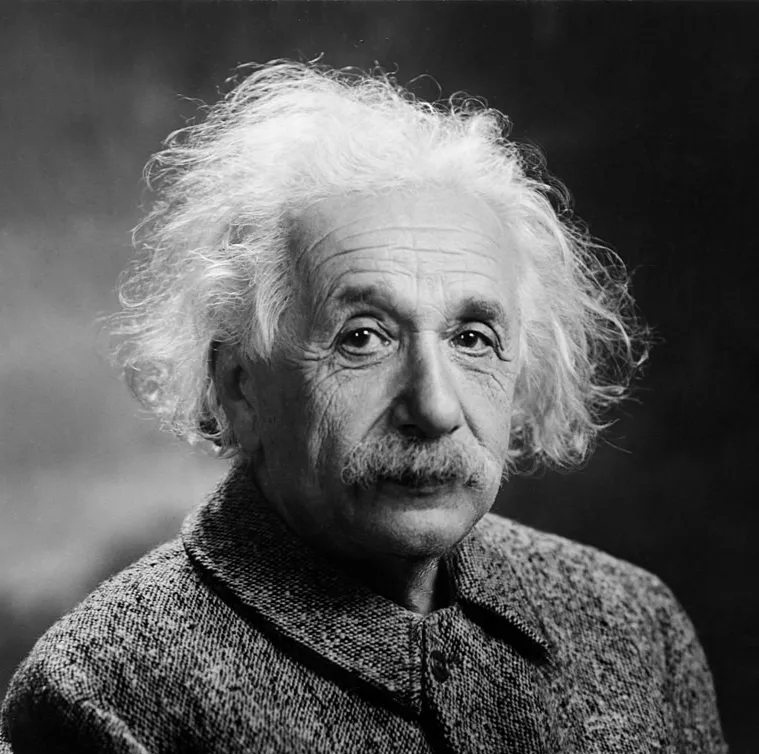
Albert Einstein, a German-born theoretical physicist, made a critical contribution to physics by completing the general theory of relativity. This theory provided a new framework for understanding gravity, which was radically different from the Newtonian mechanics that had dominated scientific thought for over two centuries.
Einstein's work culminated in a series of papers that he presented, where he elaborated on the complex mathematical formulations and core principles underlying the general theory of relativity. One notable application of this theory was Einstein's explanation of the anomaly in Mercury's orbit, known as the perihelion precession.
Mercury, the innermost planet in our solar system, exhibited a peculiar shift in its orbit that could not be entirely explained by Newton's laws of gravitation. Scientists had observed that the point of Mercury's closest approach to the Sun, its perihelion, shifted at a rate that was not fully accounted for by the gravitational influences of other planets. Einstein applied his new gravitational equations to this problem and demonstrated that the general theory of relativity accurately predicted this additional precession.
This validation of the theory served as a powerful confirmation of its correctness, providing a substantial empirical basis for its acceptance by the scientific community. The impact of Einstein's work was profound, reshaping our understanding of space, time, and gravity. It triggered further research that expanded the boundaries of astrophysics and cosmology, influencing various technological advancements, including the development of the Global Positioning System (GPS).
#EinsteinRelativity #PhysicsRevolution #MercuryPrecession #SpaceTime #MoofLife
Explore the Life Moments of
 AI Twin