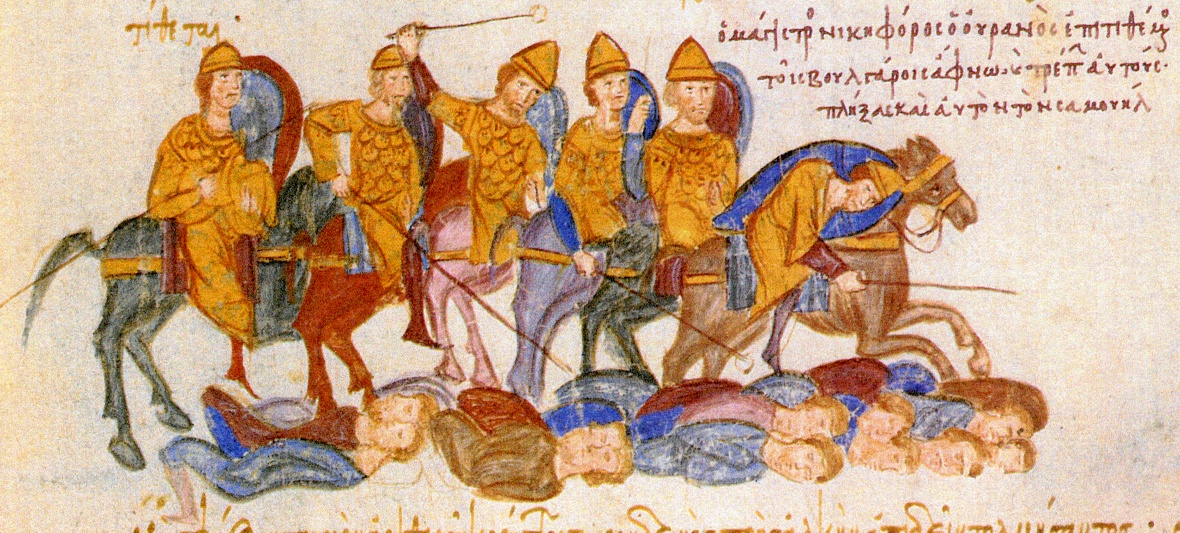
Byzantine emperor Basil II triumphs over Bulgarian Empire in Battle of Kleidion.
Albania
Military
7 min read
Updated By: History Editorial Network (HEN)
Published:
The Battle of Kleidion, fought on July 29, 1014, is a notable event in medieval Balkan history, remembered vividly from various perspectives. For the Albanians, who were under the dominion of the Bulgarian Empire at the time, the battle had profound implications for their region's political and social landscape.
The Context
During the late 10th and early 11th centuries, the Albanian territories were part of the expansive First Bulgarian Empire. Tsar Samuel had established control over these lands, integrating them into his realm. Despite Bulgarian rule, the Albanian tribes maintained a distinct identity and local governance structures, while their fate was closely tied to the broader struggles of the empire.
The Battle and Its Immediate Impact
The clash between the Byzantine Empire, led by Emperor Basil II, and the Bulgarians under Tsar Samuel took place in the rugged terrain near the Strumitsa Valley, in what is now North Macedonia. For the Albanians, the battle's outcome had immediate and far-reaching consequences. The Byzantine victory signaled a shift in power dynamics, as Basil II’s campaign was relentless in its objective to reclaim territories and dismantle Samuel’s empire.
From an Albanian viewpoint, the battle was both a distant yet deeply significant event. While the main battlefield lay away from Albanian lands, the repercussions were soon felt. The Byzantine victory weakened Bulgarian control, creating a power vacuum and triggering a series of events that would eventually lead to the Byzantine annexation of the Albanian territories.
The Aftermath and Its Consequences
With the defeat at Kleidion and the subsequent blinding of Bulgarian soldiers, morale within the empire plummeted. Tsar Samuel’s death shortly after the battle exacerbated the decline of Bulgarian power. For Albanians, this period marked the transition from Bulgarian to Byzantine rule. Basil II's campaign continued, and by 1018, the entirety of the First Bulgarian Empire, including Albanian lands, fell under Byzantine control.
The Byzantine administration brought changes to the Albanian territories. Although the Byzantines imposed their governance, they also allowed a degree of local autonomy, recognizing the distinct cultural and social structures of the Albanian tribes. This period under Byzantine rule was characterized by the integration of Albanian lands into the empire's complex administrative system, influencing local governance and economic practices.
Legacy
The Battle of Kleidion is a poignant reminder of the shifting power dynamics in the Balkans. For Albanians, it represented a transition between dominant empires and the resilience of their identity amidst these changes. The Byzantine victory, while marking the end of Bulgarian dominance, also set the stage for a new era of Byzantine influence in Albanian territories.
This historical moment is seen as a testament to the region's strategic significance and the enduring spirit of its people, who navigated through the complexities of empire transitions while maintaining their cultural heritage.
#BattleOfKleidion #AlbanianHistory #TsarSamuel #ByzantineEmpire #BalkanHistory #MedievalBalkans #HistoricalBattles #EmpireTransitions #MomentsOfLife #MoofLife_Moment #MoofLife
Primary Reference
Battle of Kleidion

Explore the Life Moments of
 AI Twin