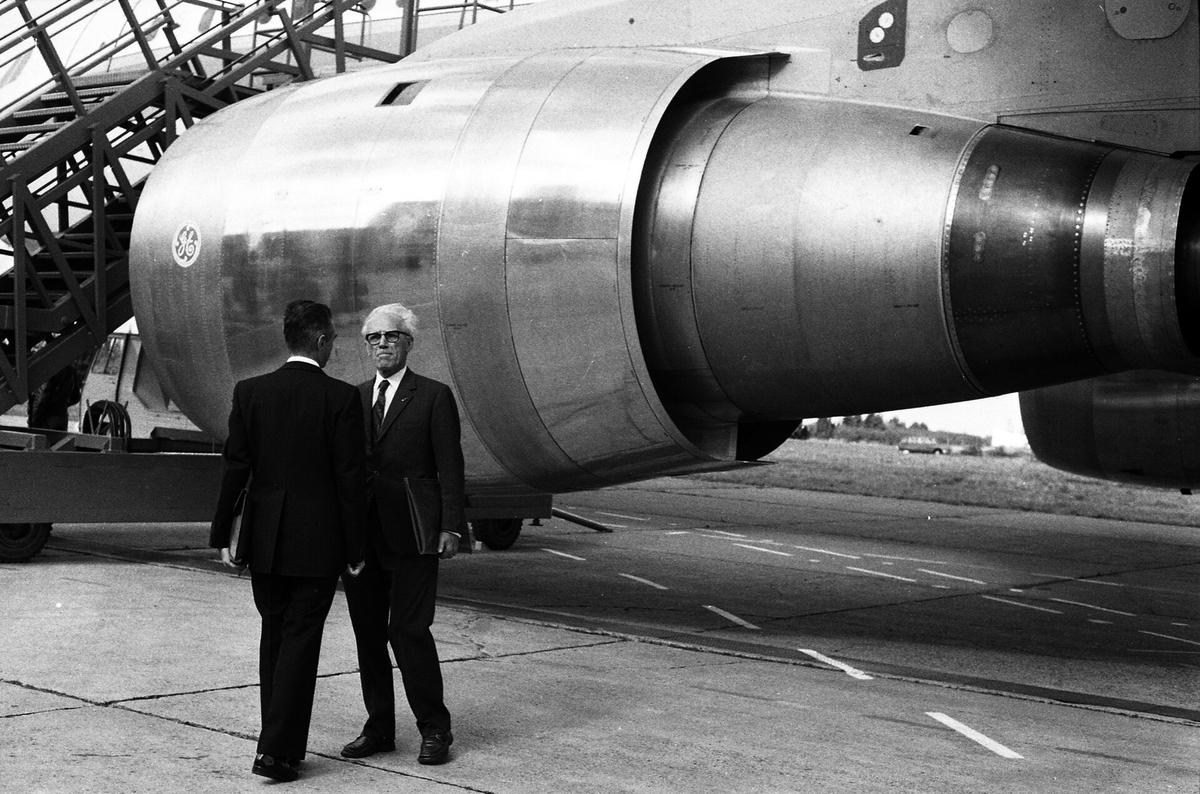
The A300B1, the world's first twin-engine widebody aircraft, makes its maiden flight in Toulouse.
United States
4 min read
Updated By: History Editorial Network (HEN)
Published:
the Airbus A300B1, the world’s first twin engine wide body commercial aircraft, completed its maiden flight from Toulouse Blagnac Airport in France, marking the first flight of the A300 program.
The aircraft that flew that day was the first prototype, registered F WUAB. The flight took off from Toulouse, where final assembly of the A300 had been established following the 1969 agreement between France and West Germany to jointly develop the aircraft. The A300B1 was designed to carry around 250 passengers in a typical two class layout and was developed to serve medium to long haul routes with lower operating costs compared to three and four engine wide body jets then in service.
The A300 introduced several technical features that distinguished it at the time, including a wide body fuselage paired with only two high bypass turbofan engines. Certification standards for extended overwater twin engine operations were more restrictive in the early 1970s, and initial commercial use focused on shorter routes. The aircraft was powered by General Electric CF6 engines. The first flight lasted approximately 1 hour and 25 minutes.
The A300B1 prototype was followed by additional development aircraft leading to the A300B2, which entered commercial service with Air France in May 1974. The A300 program later expanded into several variants, including the A300B4 and the shorter range A310 derivative. The maiden flight on 28/10/1972 marked the transition of the A300 from a multinational development project into an operational flight test program, with Toulouse remaining the central hub of Airbus aircraft production.
#A300 #Airbus #MaidenFlight #AviationHistory #Toulouse
Primary Reference
History_of_Airbus

Explore the Life Moments of
 AI Twin