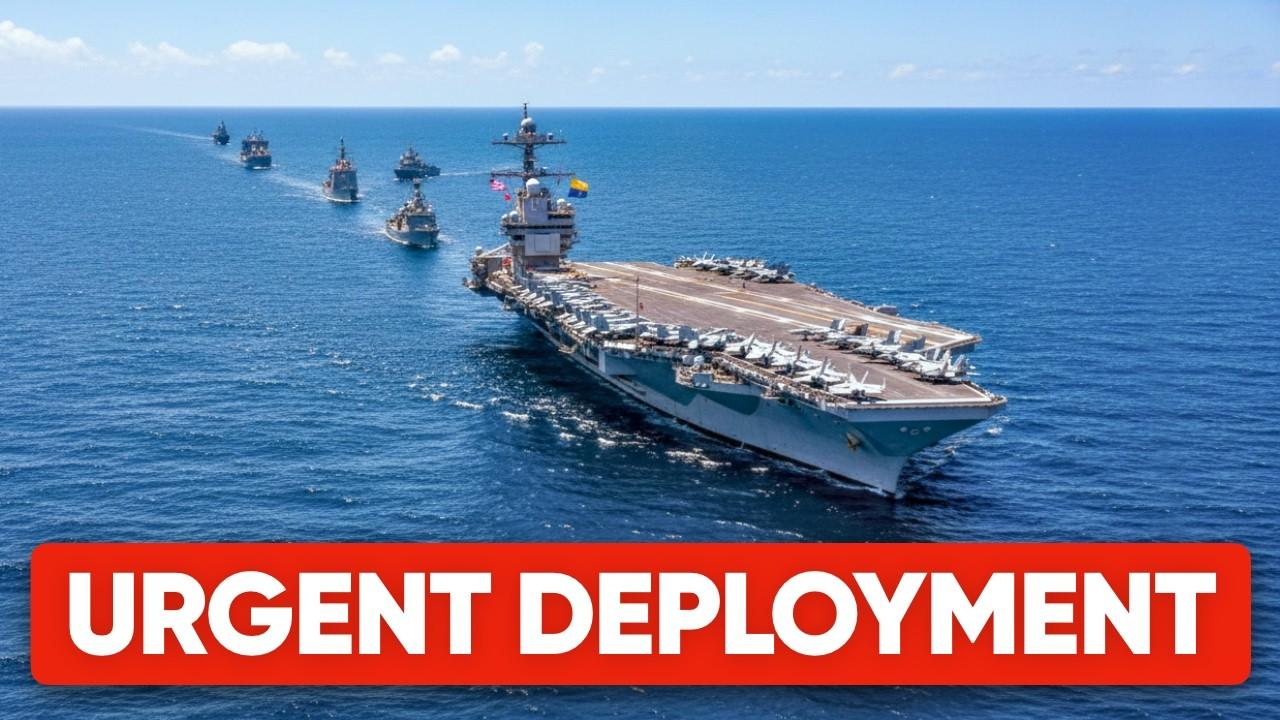
United States Assembles Major Naval Force in Middle East
Arabian Sea, Red Sea, and Eastern Mediterranean
Naval Force
War
6 min read
Updated By: History Editorial Network (HEN)
Published:
United States reached the final stage of assembling one of its largest military deployments in the Middle East in decades, positioning major naval and air assets across the Arabian Sea, Red Sea, and surrounding waters. The buildup came amid escalating tensions with Iran following the collapse of nuclear negotiations in Geneva, Switzerland, and it preceded joint U.S.–Israeli military strikes that began on 28/02/2026. The deployment involved multiple carrier strike groups and supporting vessels intended to strengthen regional deterrence and maintain maritime security.
A central component of the deployment was the USS Abraham Lincoln (CVN-72) carrier strike group. The nuclear powered aircraft carrier arrived in the Arabian Sea on 26/01/2026 after being redirected from operations in the South China Sea. The strike group carried approximately 5,700 service members and a full carrier air wing capable of conducting air defense, strike, and surveillance operations. The group included several escort ships and logistics vessels supporting sustained operations in the region.
On 26/02/2026, the USS Gerald R. Ford (CVN-78), the largest aircraft carrier in the world, departed Souda Naval Base in Crete, Greece, to reinforce U.S. naval forces near the Middle East. The carrier subsequently transited the Suez Canal, moving toward operational areas in the Red Sea. Its deployment added a second carrier strike group to the region, significantly expanding the scale of U.S. naval presence. The Ford class carrier supports advanced aircraft launch systems and large air wings capable of sustained strike operations.
The broader U.S. naval presence in late February included at least 16 ships, among them guided missile destroyers such as the USS Delbert D. Black (DDG-121) and USS McFaul (DDG-74). These vessels provide air defense, missile interception, and escort capabilities for carrier operations and commercial shipping. American naval forces also carried out maritime security missions during the buildup. On 03/02/2026, the USS McFaul intervened in the Strait of Hormuz to prevent members of Iran’s Islamic Revolutionary Guard Corps (IRGC) from seizing the U.S. flagged tanker MV Stena Imperative, an incident that underscored growing tensions in the strategic waterway.
U.S. officials described the large scale deployment as part of a strategy aimed at deterrence and diplomatic leverage. The Trump administration indicated that the military buildup was intended to pressure Tehran during stalled negotiations over its nuclear program and missile capabilities. At the same time, the deployment was also framed as a response to Iran’s crackdown on domestic protests that had been reported since late 2025. By 26/02/2026, the concentration of American naval forces represented one of the most significant U.S. military presences in the region in recent years.
#USMilitaryDeployment
#MiddleEastSecurity
#CarrierStrikeGroup
#USIranTensions
#NavalOperations
Explore the Life Moments of
 AI Twin