LG Introduces the World’s First Rollable TV
South Korea
9 min read
Updated By: History Editorial Network (HEN)
Published:
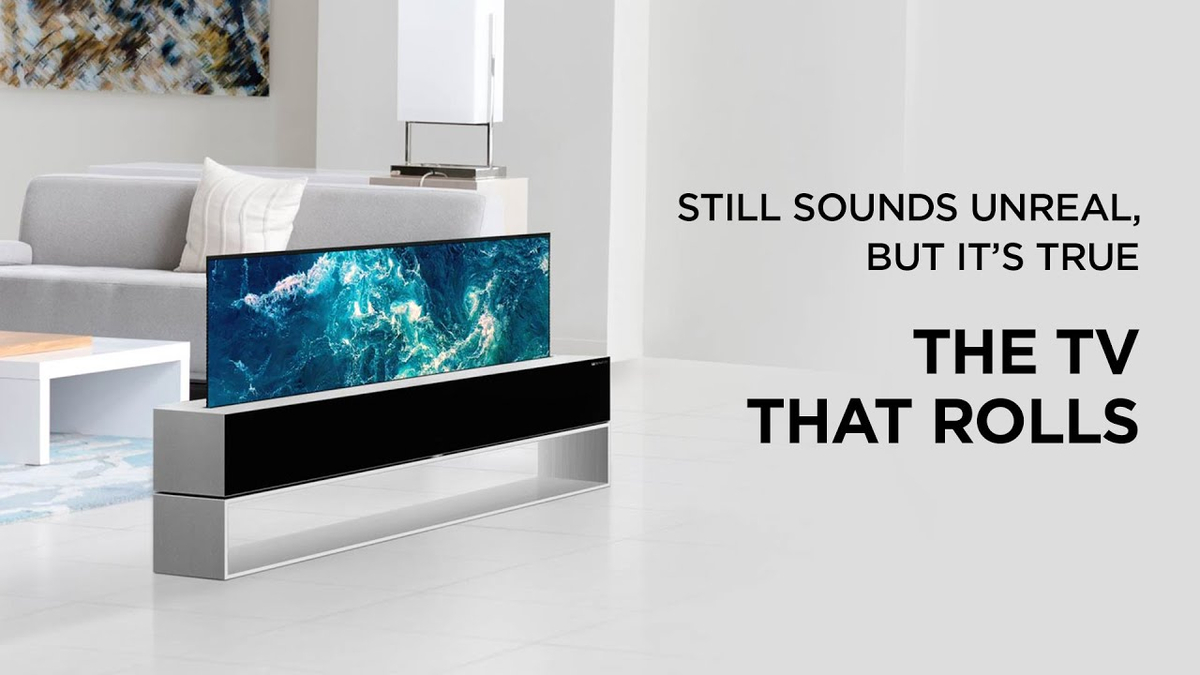
On 07/01/2019, South Korean consumer electronics manufacturer LG Electronics unveiled the LG SIGNATURE OLED TV R, model 65R9, at the Consumer Electronics Show (CES) in Las Vegas, Nevada, United States. Presented as the world's first rollable OLED television, the 65-inch 4K display could retract into a rectangular base when not in use. The product demonstrated a new approach to television design by allowing a large display to disappear from view without being physically removed from the room. Although the television was also demonstrated at IFA 2019 in Berlin, Germany, its original public unveiling took place at CES in January 2019.
The LG SIGNATURE OLED R featured a flexible 65-inch OLED panel with a resolution of 3840 × 2160 pixels. Unlike conventional LCD televisions, which require a separate backlighting system, OLED displays use individually illuminated pixels. This construction made it possible for LG to develop a screen that could bend and roll without requiring a rigid glass display assembly. The television's flexible panel was designed to move vertically through an opening in its base, retracting when not required for conventional viewing.
LG introduced three operating modes for the television: Full View, Line View, and Zero View. In Full View, the entire 65-inch display extended from the base, allowing users to watch television programs, films, and other video content. In Line View, only a narrow section of the screen remained visible, providing access to functions such as music playback, weather information, a clock, and selected home-control features. In Zero View, the screen retracted completely into the base while the television's audio system could continue operating.
The television incorporated LG's second-generation α9 intelligent processor, designed to optimize picture and sound performance through image analysis and processing algorithms. It supported high dynamic range formats, including Dolby Vision, and used LG's webOS smart television platform for streaming applications and connected entertainment features. The combination of a flexible OLED display and conventional premium television capabilities allowed LG to present the device as a functioning home entertainment product rather than simply a mechanical display prototype.
Audio equipment was integrated into the television's base, which housed a 4.2-channel, 100-watt speaker system with Dolby Atmos support. This arrangement enabled the television to continue functioning as an audio device even when its display was fully retracted. The base was designed as a freestanding furniture-like enclosure, allowing the product to be positioned within a room without requiring permanent wall mounting.
The LG SIGNATURE OLED R was demonstrated again at IFA 2019, held from 06/09/2019 to 11/09/2019 at Messe Berlin in Germany. LG used the exhibition to showcase its premium OLED television lineup and connected home technologies. The rollable television was among the products illustrating how flexible display panels could support alternative designs beyond traditional flat-screen televisions.
LG had previously demonstrated rollable OLED technology through research and prototype displays. At CES 2018, LG Display presented a 65-inch rollable OLED panel, showing the technical feasibility of a large flexible screen. The following year's LG SIGNATURE OLED R transformed that concept into a branded television with a retractable mechanism, integrated audio, image processing, and consumer-oriented controls. This progression reflected cooperation between LG Display's panel engineering and LG Electronics' television product development.
Although LG presented the OLED R in 2019, commercial availability did not begin immediately. On 20/10/2020, LG announced the launch of the LG SIGNATURE OLED R in South Korea through selected premium retail locations. The television was priced at approximately 100 million South Korean won, equivalent to roughly US$87,000 at the time. Its high price and specialized construction limited the product to a premium market rather than mainstream television buyers.
Primary Reference
LG

Explore the Life Moments of
 AI Twin