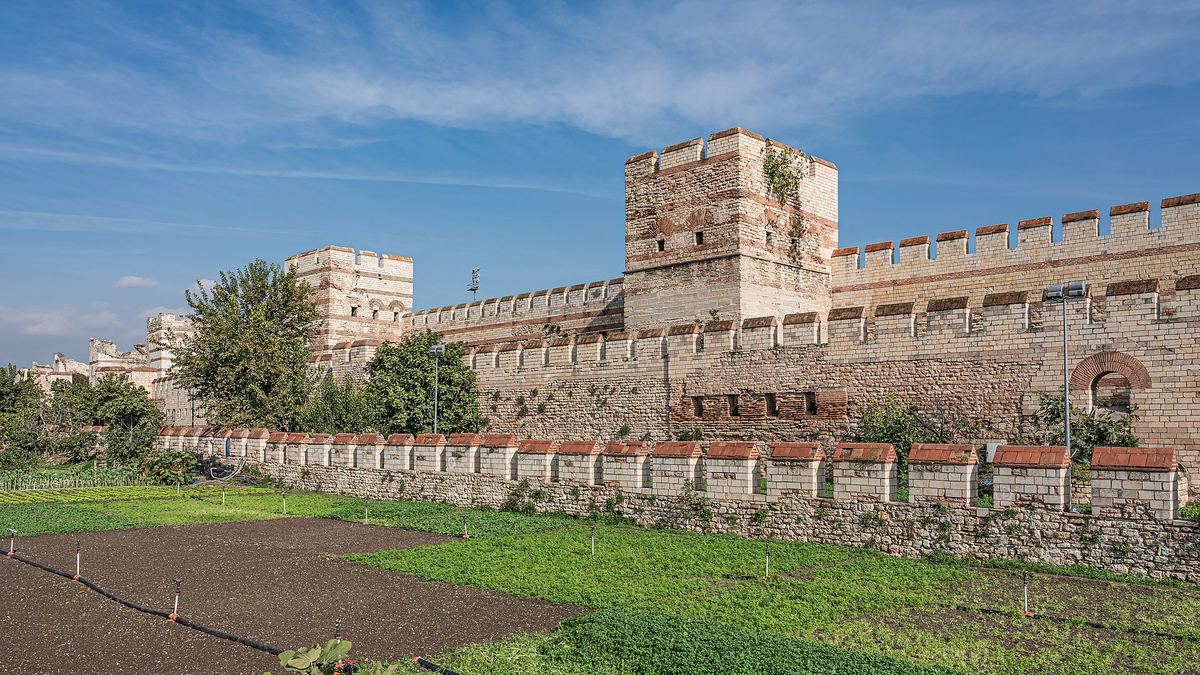
Theodosian Walls: Defense against Invasions
Greece

UNESCO
4 min read
Updated By: History Editorial Network (HEN)
Published:
The construction of the Theodosian Walls in Constantinople was a pivotal moment in the city's history. With the Roman Empire facing frequent invasions, Emperor Theodosius II decided to fortify the city's defenses by building strong defensive walls. The project began after the Goths breached the existing walls in 401, highlighting the urgent need for better fortifications.
The Theodosian Walls were built to encircle Constantinople, stretching over 6.5 kilometers and featuring towers, ditches, and moats. The walls were constructed with layers of stone and brick, reaching heights of up to 12 meters in some places. These formidable defenses provided protection against attacks from various invaders, including Attila the Hun.
Completed in 413, the Theodosian Walls made Constantinople virtually impregnable for nearly a thousand years. They played a crucial role in repelling sieges by barbarian tribes, Persians, and other enemies, safeguarding the city and the Eastern Roman Empire. The walls also symbolized the wealth and power of Constantinople as the Empire's capital.
The impact of the Theodosian Walls extended beyond military defense. They defined the city's urban layout and influenced its development as a major political, economic, and cultural center. The walls housed garrisons, provided space for markets, and controlled access to the city, shaping its growth and character.
In modern times, the remnants of the Theodosian Walls stand as a UNESCO World Heritage site and a testament to Constantinople's strategic importance in antiquity. The construction of these walls reflects the enduring legacy of Roman engineering and the enduring quest for security in the face of external threats.
#TheodosianWalls #Constantinople #Defense #Invasions #RomanEmpire #UNESCO #Greece
Primary Reference
Constantinople | crafty theatre

Explore the Life Moments of
 AI Twin