Italian Invasion Sparks Greco-Italian War, Shifts WW2 Dynamics
Greece

Political
Global Trade
4 min read
Updated By: History Editorial Network (HEN)
Published:
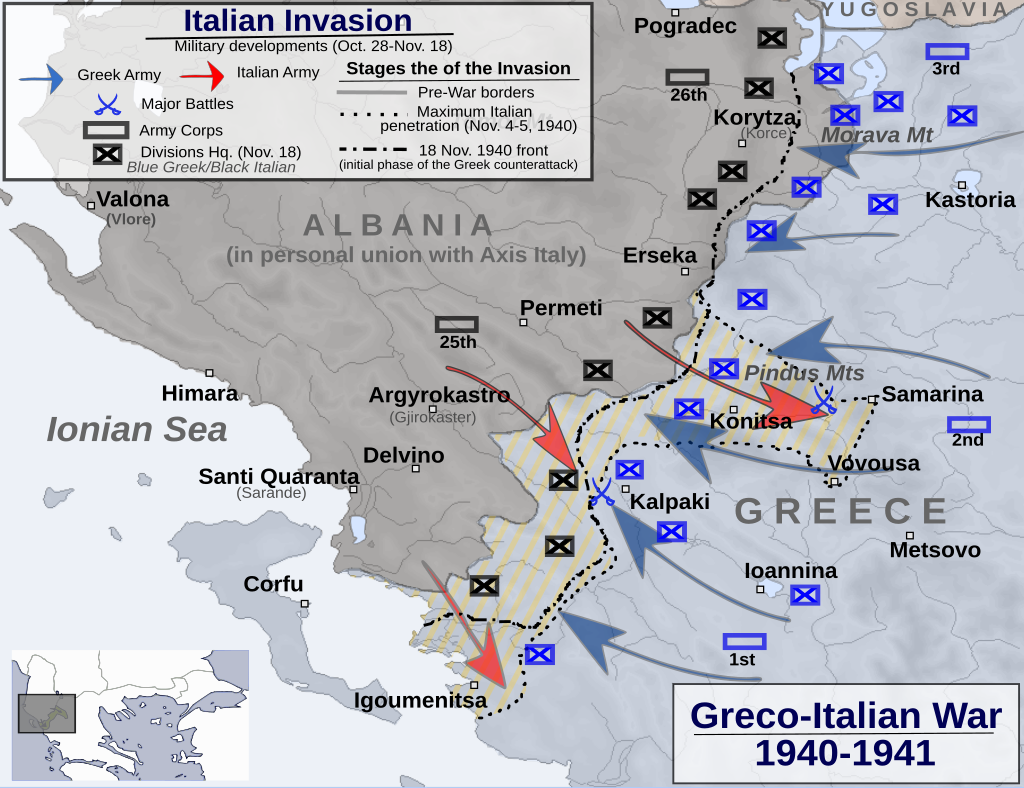
In October of 1940, the Italian invasion of Greece marked a crucial turning point in the dynamics of World War II in Europe. Benito Mussolini, seeking to expand his empire, initiated the invasion from neighboring Albania, confident of a swift victory over Greece's smaller military force. However, the Greek army put up a fierce resistance, surprising the Italians with their determination and skill.
The Greco-Italian War not only stalled Mussolini's plans for expansion but also drew the attention of other major powers. The British, eager to support Greece against their common enemy, began to provide vital aid to the Greek forces. The conflict in Greece also diverted resources and attention away from other theaters of the war, impacting the overall strategy of the Axis powers.
As the war in Greece continued, it became clear that the Italian invasion had backfired, leading to a prolonged and costly conflict for Mussolini's forces. The Greek resistance not only bolstered national morale but also demonstrated to the world that a smaller, determined force could stand up against a larger aggressor.
The Greco-Italian War set the stage for further developments in the region, including the intervention of Nazi Germany in support of their Italian allies. The conflict in Greece would ultimately evolve into a wider Balkan campaign, involving multiple nations and further complicating the European theater of the war.
The Italian invasion of Greece in 1940 had far-reaching consequences that altered the course of World War II. It showcased the resilience of the Greek people, drew in major powers to the region, and fundamentally shifted the dynamics of the conflict in Europe.
#ItalianInvasion #GrecoItalianWar #WorldWarII #Greece #AxisPowers #BritishSupport
Explore the Life Moments of
 AI Twin