Germany's Invasion Dominates Battle with Intense Military Operations
Greece

War
4 min read
Updated By: History Editorial Network (HEN)
Published:
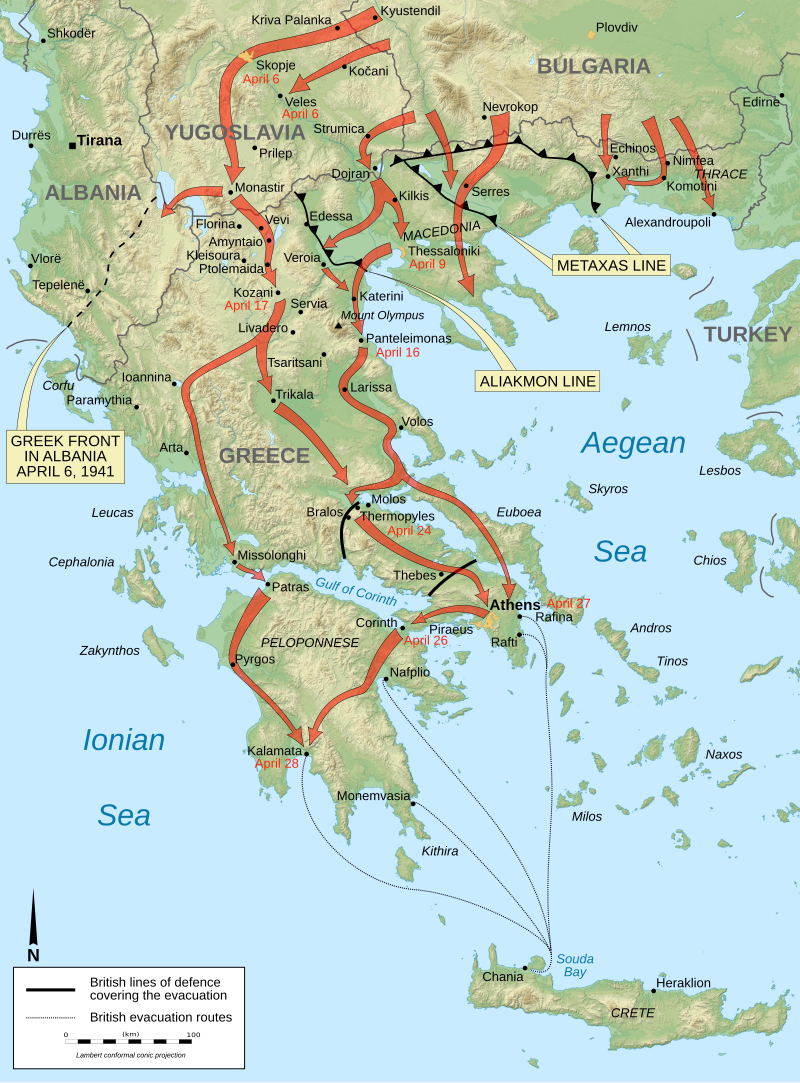
In April 1941, Germany launched a military offensive to invade Greece as part of its strategic objectives during World War II. The German forces, well-equipped and highly trained, quickly gained the upper hand in what became known as the Battle of Greece. The Greek army, though courageous and determined, struggled to defend against the overwhelming might of the German military machine.
The German invasion of Greece involved intense military operations, with air raids, ground assaults, and naval attacks coordinated to weaken Greek defenses. The rapid advance of the German forces allowed them to gain control of key territories and strategic positions across the country. Despite fierce resistance from the Greek army and civilians, the Germans managed to dominate the battlefield and push deeper into Greek territory.
The impact of Germany's invasion of Greece was significant, leading to the eventual occupation of the country by German forces. The Greek government and military were forced to retreat, and large parts of the country came under German control. The occupation lasted for several years, bringing hardship and suffering to the Greek population as they endured repression, famine, and economic exploitation under German rule.
The Battle of Greece highlighted the brutal realities of war and the devastating consequences of foreign aggression on a nation's sovereignty and independence. It also showcased the resilience and bravery of the Greek people in the face of overwhelming odds, as they continued to resist and fight for their freedom despite the hardships they faced.
#Germany #Greece #WorldWarII #Invasion #Battle #Occupation

Explore the Life Moments of
 AI Twin