German Occupation of Greece during WWII
Greece

WWII
4 min read
Updated By: History Editorial Network (HEN)
Published:
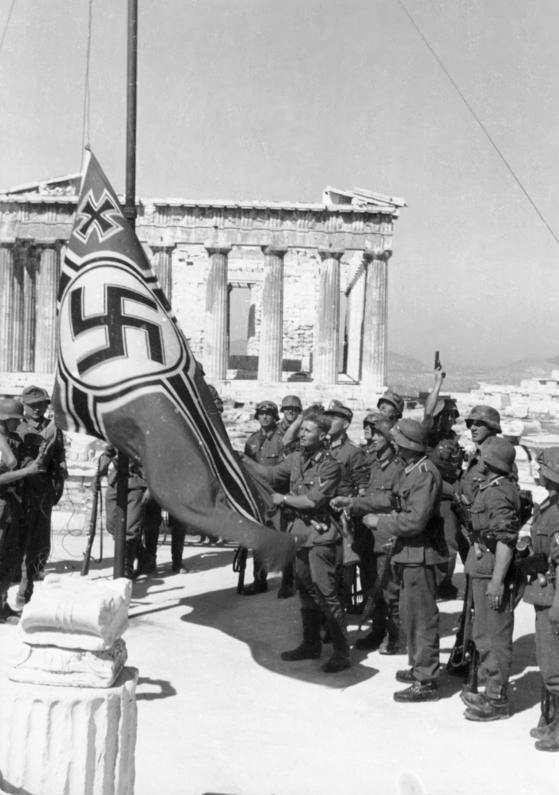
In April 1941, German forces captured Athens, leading to the occupation of Greece during World War II. The invasion was part of the Axis powers' campaign to control strategic locations in Europe. The fall of Athens marked a turning point in Greece's involvement in the war, as the German forces swiftly imposed their authority over the country.
The occupation had a profound impact on the Greek population, who faced oppression, food shortages, and economic hardships under the German regime. Resistance groups, such as the National Liberation Front (EAM), emerged to fight against the occupation, leading to a brutal suppression by German forces.
During the occupation, the Jewish population in Greece suffered greatly, with thousands being deported to concentration camps. The cultural heritage of Greece, including ancient monuments and artifacts, faced the threat of destruction or looting during this period of foreign control.
Despite the challenges, the Greek people maintained a spirit of resilience and resistance throughout the occupation. The fight for liberation continued, with guerrilla warfare and acts of sabotage against the German forces.
The occupation of Greece by German forces exemplifies the struggles faced by the country during World War II. The impact of the occupation was felt across all aspects of Greek society, from political to cultural, leaving a lasting legacy in the collective memory of the nation.
#GreekHistory #WWII #Occupation #Resistance #GermanForces

Explore the Life Moments of
 AI Twin