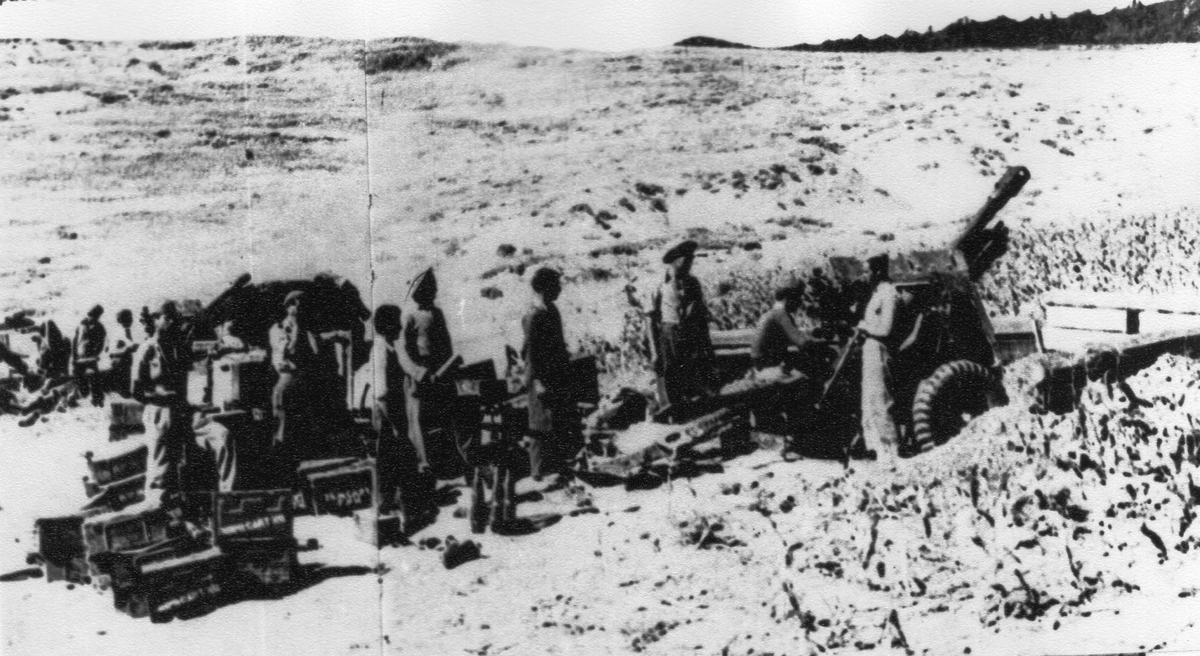
Civil Conflict Erupts Between Government and Communist Insurgents
Greece

Political
4 min read
Updated By: History Editorial Network (HEN)
Published:
Following the end of World War II, Greece found itself in a turbulent period marked by political and social unrest. The government faced off against communist insurgents in brutal battles, sparking a civil conflict that would have a lasting impact on the nation.
The conflict stemmed from a power struggle between the Greek government, supported by Western allies, and communist forces seeking to establish a socialist regime. The communist-led insurgents, known as the Democratic Army of Greece, aimed to gain control following the end of German occupation during the war. Fueled by Cold War tensions, the conflict quickly escalated into a full-scale civil war.
The brutal battles that ensued caused widespread destruction and loss of life across Greece. Both sides committed atrocities as they vied for control, leading to a humanitarian crisis and deepening political divisions within the country. The conflict drew international attention as it became a proxy war between the Western powers and the Soviet Union.
The civil conflict in Greece had far-reaching consequences for the nation. The devastated infrastructure and economy posed significant challenges to post-war reconstruction efforts. The political landscape of Greece was reshaped, with long-lasting effects on the country's governance and society.
Despite the eventual defeat of the communist forces in the late 1940s, the legacy of the civil conflict continued to influence Greek politics and society for decades to come. The scars of the war remained fresh in the collective memory of the Greek people, serving as a reminder of the fragility of peace and the high cost of political instability.
#CivilConflict #Greece #CommunistInsurgency #ColdWar #PoliticalUnrest
Explore the Life Moments of
 AI Twin