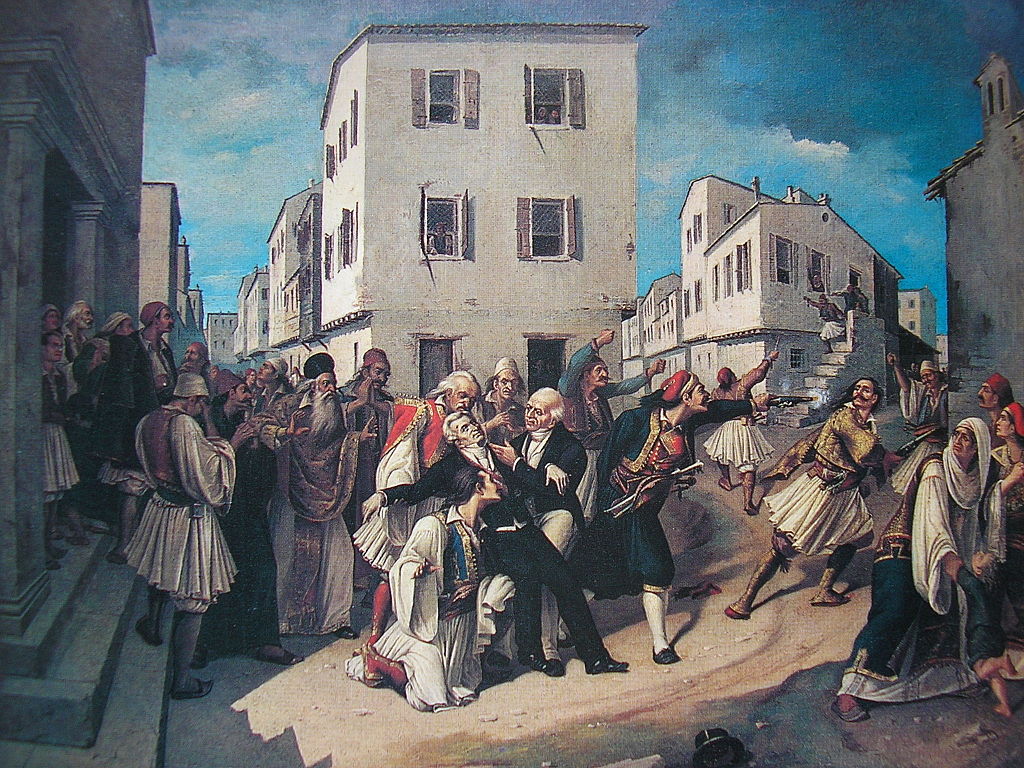
Assassination of Ioannis Kapodistrias in his role as Greek head of state.
Greece

Political
4 min read
Updated By: History Editorial Network (HEN)
Published:
Ioannis Kapodistrias, the first Greek head of state, was assassinated while in office. He played a crucial role in the liberation of Greece from Ottoman rule and became the country's leader in its transition to independence. Kapodistrias implemented reforms to modernize the Greek state and stabilize the newly established government. However, his policies faced opposition from powerful local factions and foreign interests.
The assassination took place in the midst of political unrest and tensions within the Greek society. Kapodistrias had made enemies due to his centralizing policies and attempts to limit the power of regional leaders. The assassination highlighted the challenges of governance in a fragmented and volatile post-revolutionary environment. His death was mourned by many who saw him as a visionary leader dedicated to the nation's progress.
Despite his tragic end, Kapodistrias' legacy lived on through the institutions he established and the groundwork he laid for the modern Greek state. His efforts to build a strong and unified nation became the foundation for future leaders to continue the work of nation-building and governance. The assassination served as a sobering reminder of the complexities and perils of political leadership in a turbulent period of Greek history.
The event underscored the struggles of a nascent state to assert its authority and overcome internal divisions. It also highlighted the influence of external powers in the affairs of the Greek nation. The legacy of Ioannis Kapodistrias as a statesman and a martyr for Greek independence remains an enduring symbol of the country's journey towards sovereignty and nationhood. #IoannisKapodistrias #GreekIndependence #Assassination #NationBuilding

Explore the Life Moments of
 AI Twin