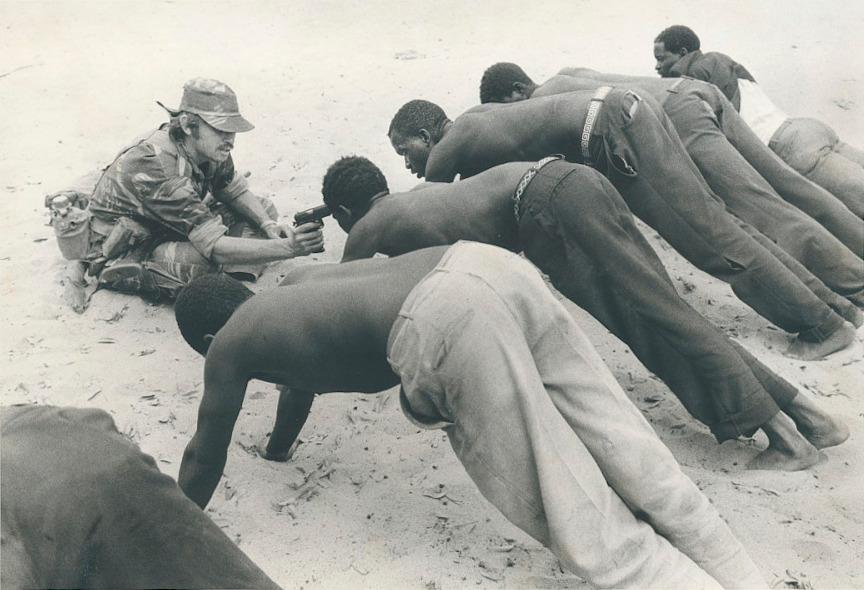
The Start of the Bush War
Zimbabwe

Political
5 min read
Updated By: History Editorial Network (HEN)
Published:
The initiation of the Rhodesian Bush War can be traced to a time when tensions in Southern Rhodesia, modern-day Zimbabwe, had reached a critical point. This period saw escalating conflicts between indigenous African nationalist groups and the white minority government. Under the leadership of Prime Minister Ian Smith, the Rhodesian Front government declared unilateral independence from Britain, refusing to legislate a majority-rule government. This declaration marked a turning point, where African nationalist groups, notably the Zimbabwe African National Union (ZANU) and the Zimbabwe African People's Union (ZAPU), took up arms to fight for liberation.
The Rhodesian Bush War, also known as the Second Chimurenga, was primarily a guerrilla war. It involved strategic assaults on settler and government infrastructures. African nationalist fighters, with substantial support from neighboring countries, employed hit-and-run tactics, sabotage, and ambushes against Rhodesian forces which consisted of the army, police, and specialized units like the Selous Scouts.
The conflict had a profound socio-political and economic impact. Civilians often found themselves caught in the crossfire, leading to substantial displacement and loss of life. Rhodesia's economy, which heavily relied on agriculture and mining, suffered due to international sanctions and the constant threat of insurgent attacks. Reports indicated that thousands of lives were lost, including civilians and combatants from both sides. The estimate of total casualties remains ambiguous due to the nature of guerrilla warfare, but some sources claim upwards of 25,000 fatalities.
Throughout the conflict, various diplomatic attempts to broker peace emerged, although initial negotiations failed to produce a lasting resolution. The role of neighboring African nations and international actors, who sympathized with the nationalist cause, was pivotal in sustaining the resistance movement through logistical and material support.
In the context of historical significance, the start of the Rhodesian Bush War catalyzed the eventual collapse of white minority rule. It set the stage for the Lancaster House Agreement, which eventually led to the establishment of Zimbabwe as an independent nation under majority rule governance.
#MoofLife #RhodesianBushWar #ZimbabweHistory #LiberationMovement #GuerrillaWarfare #AfricanNationalism
Primary Reference
Rhodesian Bush War - Wikipedia

Explore the Life Moments of
 AI Twin