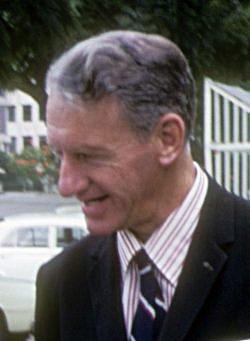
Ian Smith breaks diplomatic relations with Britain
Zimbabwe
Political
Global Trade
5 min read
Updated By: History Editorial Network (HEN)
Published:
Ian Smith, serving as the Prime Minister of Rhodesia, faced a turning point when he decided to sever diplomatic relations with Britain. This decision followed Rhodesia's Unilateral Declaration of Independence (UDI), which had already strained relations between the former colony and its colonial power. The UDI was largely driven by Smith's government, which aimed to maintain white minority rule in the face of increasing pressure for African majority rule.
Britain, under the leadership of the Prime Minister at the time, had insisted on a transition to majority rule before granting full independence. However, Smith and his supporters rejected this condition, leading to a standoff. Economic sanctions were imposed by Britain and later by the United Nations, aiming to isolate Rhodesia economically and diplomatically. Despite these pressures, Smith's regime pursued a path of defiance.
The rupture with Britain symbolized Rhodesia's fierce commitment to its declared independence and its stark opposition to British decolonization policies. This decision was met with international condemnation and heightened Rhodesia's isolation. Neighboring African countries and the broader international community largely did not recognize the legitimacy of Rhodesia's government.
Internally, this move emboldened the white minority government, but it also intensified the liberation struggle led by African nationalist groups like the Zimbabwe African National Union (ZANU) and the Zimbabwe African People's Union (ZAPU). The conflict eventually evolved into a protracted guerrilla war, increasing violence, and hardship for the population.
From an economic perspective, severing ties with Britain exacerbated Rhodesia's economic difficulties. The sanctions disrupted trade and limited access to international markets, forcing the country to seek alternative means of sustaining its economy, often through clandestine trade and alliances with sympathetic nations.
In summary, the break in diplomatic relations between Rhodesia and Britain underscored the intractable positions of the two governments on the issue of governance and independence. This event significantly influenced Rhodesia’s political landscape and set the stage for the protracted struggle that ultimately led to the establishment of Zimbabwe.
#MoofLife #ZimbabweHistory #ColonialStruggles #Decolonization #RhodesianConflict #UDI #AfricanLiberation
Primary Reference
Rhodesia's Unilateral Declaration of Independence - Wikipedia

Explore the Life Moments of
 AI Twin