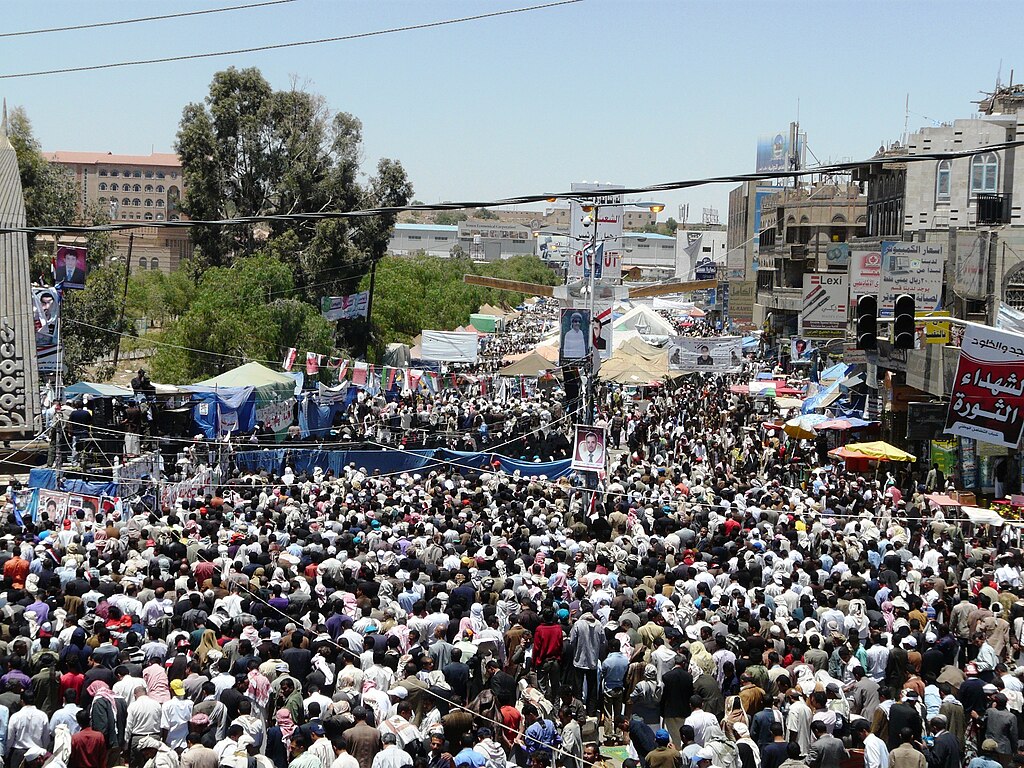
Yemeni Crisis Originating from 2011 Revolution
Jaar, Abyan Governorate, Yemen
Politics
Middle East
7 min read
Updated By: History Editorial Network (HEN)
Published:
Updated:
On 27/03/2011, armed militants seized a government munitions factory in the town of Jaar in Yemen’s Abyan Governorate during a period of escalating unrest linked to the 2011 Yemeni uprising against President Ali Abdullah Saleh. The incident occurred as Yemen faced growing political instability, mass anti government protests, and weakening state control across several provinces during the wider wave of Arab Spring demonstrations in the Middle East.
The militants, believed to be linked to Islamist armed groups including Al Qaeda in the Arabian Peninsula (AQAP), took control of the weapons facility after clashes with security forces and local authorities. Reports from the time indicated that government forces either withdrew or were overwhelmed as militants entered the factory complex. The seizure highlighted the deteriorating security situation in southern Yemen, where militant organizations increasingly exploited the weakening authority of the central government.
The factory in Jaar reportedly contained large quantities of ammunition and military equipment. Following the takeover, local residents entered the site and removed weapons and supplies from the facility. Shortly afterward, a powerful explosion occurred inside the complex, triggering fires and causing significant casualties. Reports from Yemeni officials and medical sources stated that dozens of people were killed or injured in the blast, many of them civilians who had gathered at the site after the militants captured the factory.
At the time, President Ali Abdullah Saleh was facing nationwide protests demanding his resignation after more than three decades in power. Demonstrations intensified following deadly crackdowns on protesters in Sana’a and other cities earlier in March 2011. Political tensions deepened as tribal leaders, military commanders, and opposition groups began distancing themselves from Saleh’s government, weakening state institutions and security coordination across the country.
Abyan Governorate became one of the regions most affected by the security vacuum created during the uprising. Islamist militant groups expanded their presence in several towns and rural districts while government forces focused heavily on containing protests in major urban centers. AQAP, already active in Yemen before 2011, used the period of political turmoil to strengthen operational capabilities and establish influence in parts of southern Yemen.
The seizure of the Jaar munitions factory became one of several incidents demonstrating how the political crisis intersected with Yemen’s broader security challenges. International observers and regional governments expressed concern that instability inside Yemen could create additional opportunities for militant organizations to expand their activities amid the weakening control of state authorities.
Historical Significance
The takeover of the Jaar weapons factory reflected the rapid erosion of government authority during Yemen’s 2011 uprising and showed how militant groups benefited from the country’s political fragmentation. Events in Abyan during this period contributed to the long term instability that later evolved into Yemen’s wider civil war and regional conflict.
#mooflife
#MomentOfLife
#YemeniCrisis
#2011Revolution
#AliAbdullahSaleh
#ArabSpring
#HumanitarianDisaster
Primary Reference
Yemeni revolution

Explore the Life Moments of
 AI Twin