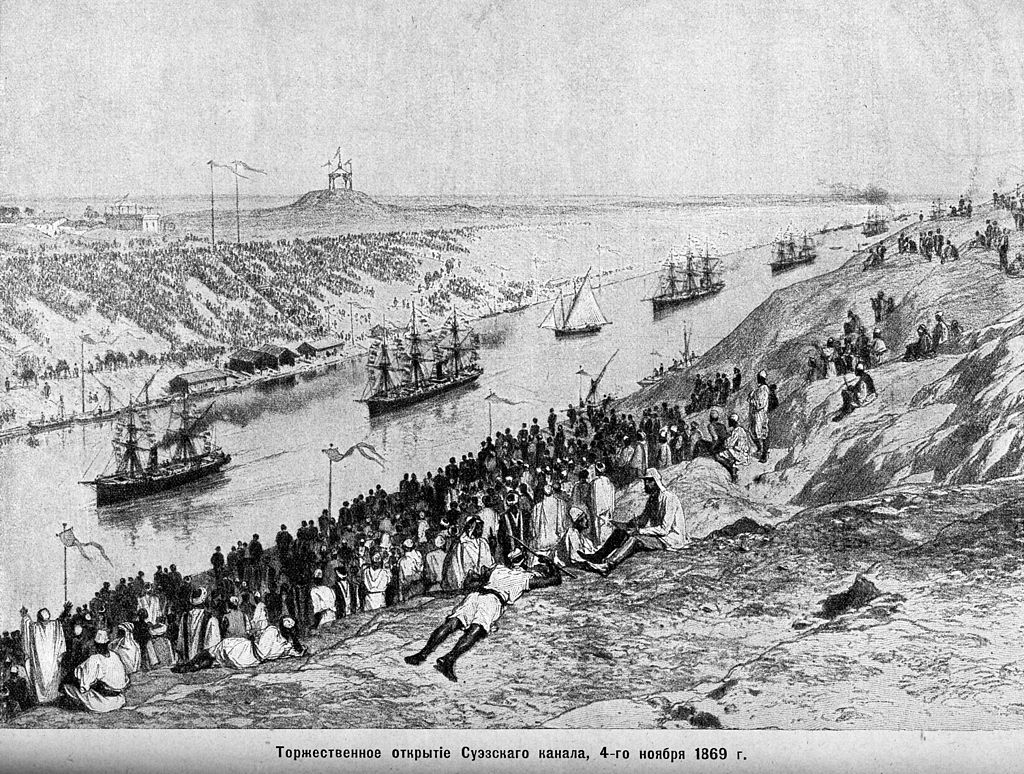
Opening of the Suez Canal
Yemen
Historical Events
Trade and Commerce
Geopolitical Strategies
6 min read
Updated By: History Editorial Network (HEN)
Published:
Updated:
On 17/11/1869, the Suez Canal officially opened in Egypt, creating a direct maritime route between the Mediterranean Sea and the Red Sea. While the canal was located far from Yemen itself, its opening had a major impact on Yemen’s political, economic, and strategic importance by placing the region along one of the world’s most critical international shipping corridors.
Before the canal opened, maritime trade between Europe and Asia required ships to travel around the southern tip of Africa via the Cape of Good Hope. The completion of the Suez Canal dramatically shortened travel times and increased commercial traffic through the Red Sea. As a result, ports and territories along the route, including Aden in southern Yemen, became increasingly valuable for trade, naval operations, and imperial competition.
At the time of the canal’s opening, Aden was already under British control, having been occupied by Britain in 1839. The port quickly grew into one of the most important coaling and refueling stations for steamships traveling between Europe, India, and East Asia. Increased maritime activity after 1869 accelerated Aden’s economic expansion and strengthened Britain’s strategic commitment to maintaining control over the area. The city developed into a major commercial hub connecting the Arabian Peninsula, East Africa, and South Asia.
The opening of the canal also intensified foreign interest in the wider Yemeni region. Control of Red Sea shipping routes became increasingly tied to European imperial competition and regional power politics during the late nineteenth and early twentieth centuries. Yemen’s location near the Bab el Mandeb Strait, which links the Red Sea to the Gulf of Aden, gained heightened geopolitical significance because of the growing volume of international shipping moving through the canal.
Economically, the canal contributed to greater integration of regional trade networks but also reinforced external influence over southern Yemen, particularly in Aden and surrounding protectorates administered by Britain. Meanwhile, northern Yemen under the Mutawakkilite Imamate remained comparatively isolated for much of the following decades, creating differing political and economic trajectories between north and south Yemen.
The long term effects of the Suez Canal continued well into the twentieth century. Aden became one of the busiest ports in the world during parts of the British colonial era, and Yemen’s proximity to global shipping lanes remained strategically important during periods of regional conflict, Cold War competition, and international maritime security operations.
Historical Significance
The opening of the Suez Canal elevated Yemen’s importance within global trade and imperial strategy by placing nearby maritime routes at the center of international commerce. The event helped shape the development of Aden as a major port city and influenced the geopolitical role of Yemen for generations.
17th November 1869: Ships in the Suez Canal at its opening.
#mooflife
#MomentOfLife
#SuezCanal
#GlobalTrade
#OttomanEmpire
#MaritimeHistory
#TradeRoutes
Primary Reference
Suez Canal opens

Explore the Life Moments of
 AI Twin