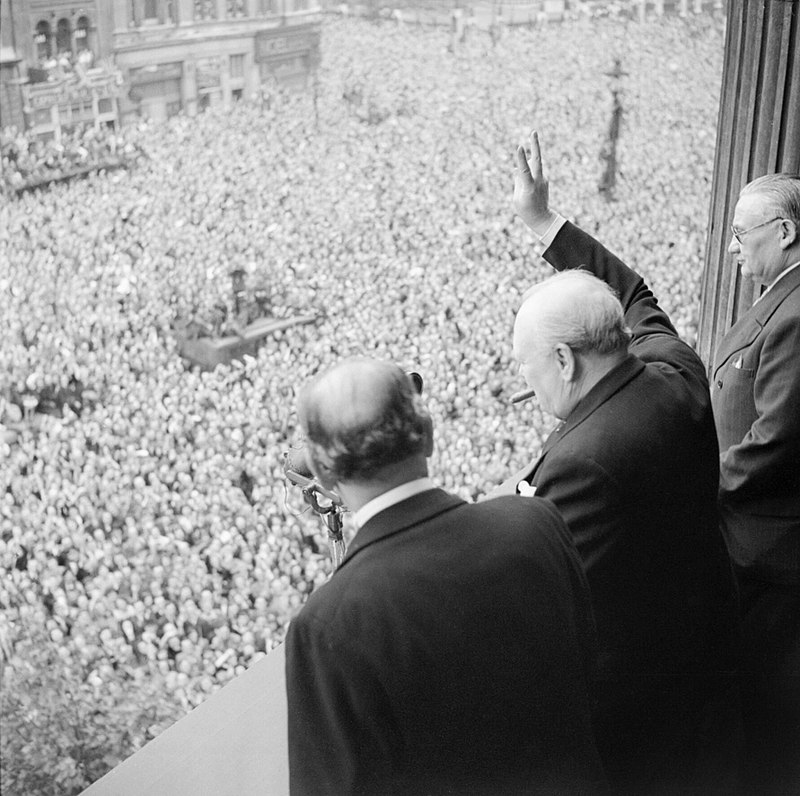
Victory in Europe Day (VE Day) — official end of WWII in Europe
Germany
4 min read
Updated By: History Editorial Network (HEN)
Published:
Victory in Europe Day (VE Day) was celebrated on 8 May 1945, marking the official end of the Second World War in Europe. Following Germany’s unconditional surrender, first signed at Reims on 7 May and ratified in Berlin late on 8 May (9 May Moscow time), hostilities formally ceased across the continent. The announcement was met with immense relief and celebration in Allied nations after nearly six years of conflict.
In London, Prime Minister Winston Churchill declared the end of the war in Europe, and vast crowds gathered in Trafalgar Square and outside Buckingham Palace, where King George VI and the royal family appeared alongside Churchill. In the United States, President Harry S. Truman dedicated the victory to his late predecessor, Franklin D. Roosevelt, who had died less than a month earlier. Across liberated capitals such as Paris, Brussels, and Prague, similar celebrations erupted.
For the Soviet Union, where the war had lasted nearly four years and claimed millions of lives, 9 May was designated as Victory Day, reflecting the timing of the Berlin surrender signing in Moscow’s time zone.
While VE Day marked the end of Nazi Germany and the collapse of the Third Reich, the war was not yet over globally. In the Pacific, fierce fighting continued against Japan, and Allied attention quickly shifted to bringing that conflict to an end. Nonetheless, 8 May 1945 remains one of the most significant milestones of the twentieth century, symbolizing liberation, relief, and the close of Europe’s most devastating war.
#MomentsOfLife #MoofLife_Moment #MoofLife #WWII #VEDay #VictoryInEurope #GermanSurrender #EndOfWarEurope
Primary Reference
Victory in Europe Day

Explore the Life Moments of
 AI Twin