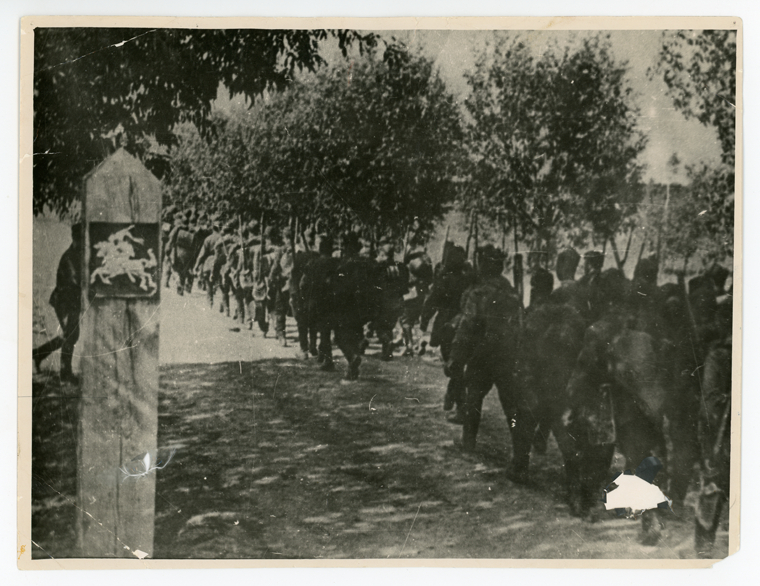
USSR Annexes Lithuania
Germany


Politics
Soviet Union
4 min read
Updated By: History Editorial Network (HEN)
Published:
Updated:
The annexation of Lithuania by the USSR was part of a broader strategy to expand Soviet influence in Eastern Europe during a period of geopolitical upheaval. Following the Molotov-Ribbentrop Pact, a non-aggression treaty between the Soviet Union and Nazi Germany, the Baltic states, including Lithuania, were effectively placed within the Soviet sphere of influence. This agreement allowed the USSR to exert control over these territories without facing immediate opposition from Germany. The formal annexation of Lithuania was executed swiftly, with Soviet military forces entering the country and establishing a government aligned with Moscow. This move was met with little resistance, as Lithuania had been weakened by political instability and the threat of war in the region. The annexation was not recognized by many Western nations, which viewed it as an illegal occupation rather than a legitimate incorporation into the Soviet Union.
The impact of the annexation on Lithuania was profound and long-lasting. The Soviet regime implemented policies that aimed to suppress Lithuanian nationalism and integrate the country into the Soviet economic and political system. This included the nationalization of industries, collectivization of agriculture, and the establishment of a one-party state. The population faced repression, with thousands of Lithuanians deported to Siberia or imprisoned for opposing Soviet rule. The annexation also led to significant demographic changes, as the Soviet government encouraged migration from other parts of the USSR to Lithuania. The legacy of this annexation continues to influence Lithuania's national identity and its relationship with Russia, as the country has sought to assert its independence and sovereignty in the years following the dissolution of the Soviet Union.
#mooflife
#MomentOfLife
#Ussr
#Lithuania
#Annexation
#SovietUnion
#BalticStates
Primary Reference
Occupation of the Baltic states

Explore the Life Moments of
 AI Twin