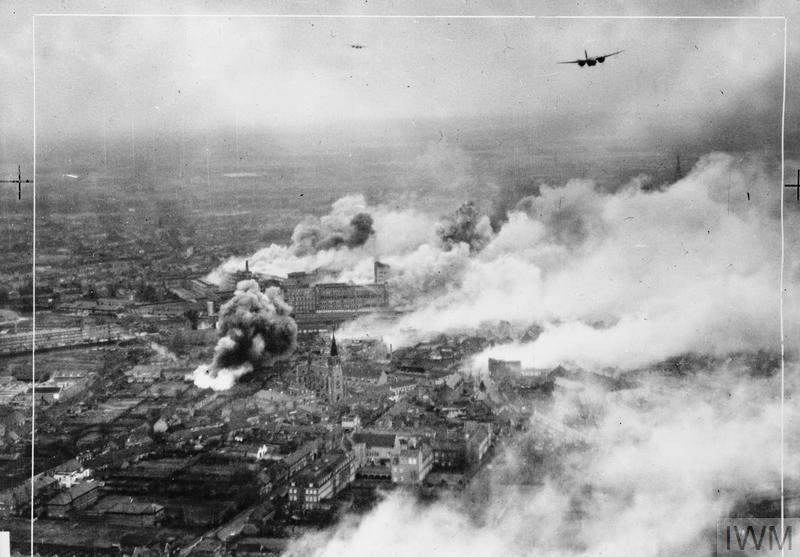
The Royal Air Force (RAF) conducted bombing raids on Eindhoven
Germany
'%3e%3cpath fill='%23012169' d='M0 0v30h60V0z'/%3e%3cpath stroke='%23fff' stroke-width='6' d='m0 0 60 30m0-30L0 30'/%3e%3cpath stroke='%23C8102E' stroke-width='4' d='m0 0 60 30m0-30L0 30' clip-path='url(%23b)'/%3e%3cpath stroke='%23fff' stroke-width='10' d='M30 0v30M0 15h60'/%3e%3cpath stroke='%23C8102E' stroke-width='6' d='M30 0v30M0 15h60'/%3e%3c/g%3e%3c/svg%3e)

3 min read
Updated By: History Editorial Network (HEN)
Published:
Updated:
The Royal Air Force (RAF) conducted bombing raids on Eindhoven, a city in the Netherlands, as part of its broader strategic campaign during World War II. This operation was aimed at disrupting German military operations and supply lines, as Eindhoven was a significant industrial center and transportation hub. The city housed important infrastructure, including factories that contributed to the German war effort. The bombing raids were part of a series of coordinated attacks targeting various locations in occupied Europe, which were intended to weaken the enemy's capacity to sustain its military operations. The impact of these raids was significant, as they not only aimed to destroy military targets but also to demoralize the German forces and the civilian population supporting them. The RAF's bombing campaign was characterized by its reliance on heavy bombers, which were tasked with delivering payloads over long distances, often facing anti-aircraft defenses and fighter interceptors. The raids on Eindhoven were part of a larger strategy that included targeting cities in France and Germany, reflecting the RAF's commitment to engaging the enemy on multiple fronts. The effectiveness of these operations varied, with some missions achieving their objectives while others faced challenges due to weather conditions and enemy defenses. Overall, the bombing of Eindhoven contributed to the ongoing air war in Europe, which played a crucial role in the eventual Allied victory.
#mooflife
#MomentOfLife
#Raf
#Eindhoven
#WorldWarIi
#BombingRaids
#MilitaryStrategy
Primary Reference
Operation Oyster

Explore the Life Moments of
 AI Twin