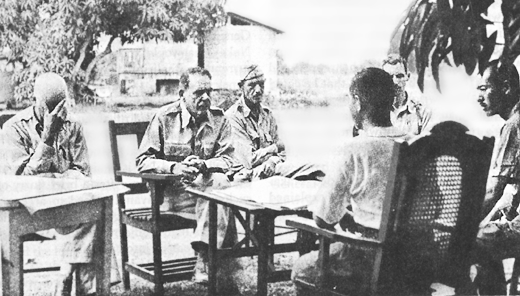
Surrender of U.S. forces in the Philippines
Germany


'%3e%3ccircle r='9'/%3e%3cg id='d'%3e%3cg id='c'%3e%3cg id='b'%3e%3cpath d='m-19 0 1.169 1.169L0 0l-17.831-1.169z'/%3e%3cpath id='a' d='m-.884.116.05.05L0 0z' transform='scale(19.2381)'/%3e%3cuse xlink:href='%23a' transform='scale(1 -1)'/%3e%3c/g%3e%3cuse xlink:href='%23b' transform='rotate(45)'/%3e%3c/g%3e%3cuse xlink:href='%23c' transform='rotate(90)'/%3e%3c/g%3e%3cuse xlink:href='%23d' transform='rotate(180)'/%3e%3cg transform='translate(-2.02)'%3e%3cg id='f' transform='translate(37.962)'%3e%3cpath id='e' d='M5 0 1.618 1.176l-.073 3.58-2.163-2.854-3.427 1.037L-2 0z'/%3e%3cuse xlink:href='%23e' transform='scale(1 -1)'/%3e%3c/g%3e%3cuse xlink:href='%23f' transform='rotate(120)'/%3e%3cuse xlink:href='%23f' transform='rotate(-120)'/%3e%3c/g%3e%3c/g%3e%3c/svg%3e)
Military History
World War II
Philippine History
4 min read
Updated By: History Editorial Network (HEN)
Published:
Updated:
The surrender of U.S. forces in the Philippines marked a pivotal moment in World War II, particularly in the Pacific theater. The event culminated on Corregidor Island, where Lt. General Jonathan M. Wainwright officially surrendered the remaining U.S. troops to Lt. General Masaharu Homma. This surrender followed a prolonged and arduous campaign against Japanese forces, which had begun with the invasion of the Philippines. The U.S. military faced significant challenges, including supply shortages, overwhelming enemy numbers, and the strategic disadvantage of being outmaneuvered in the field. Approximately 12,000 American and Filipino soldiers were taken as prisoners, leading to dire consequences for those captured, including the infamous Bataan Death March, where thousands suffered from malnutrition, disease, and execution during their forced march to prison camps.
The impact of this surrender was profound, as it not only represented a significant loss for U.S. forces but also bolstered Japanese military confidence in their campaign across the Pacific. The fall of the Philippines was a strategic blow to the Allies, as it provided Japan with a crucial foothold in Southeast Asia and disrupted supply lines. The event also highlighted the need for improved military strategy and coordination among Allied forces. In the aftermath, the U.S. military began to reassess its approach to the Pacific War, leading to a series of counteroffensives that would eventually turn the tide against Japan. The surrender and subsequent treatment of prisoners of war became a rallying point for American forces, fueling a determination to reclaim lost territory and avenge the fallen soldiers.
#mooflife
#MomentOfLife
#Philippines
#WorldWarIi
#U.s.ForcesSurrender
#BataanDeathMarch
#JapaneseOccupation
Primary Reference
Battle of Bataan

Explore the Life Moments of
 AI Twin