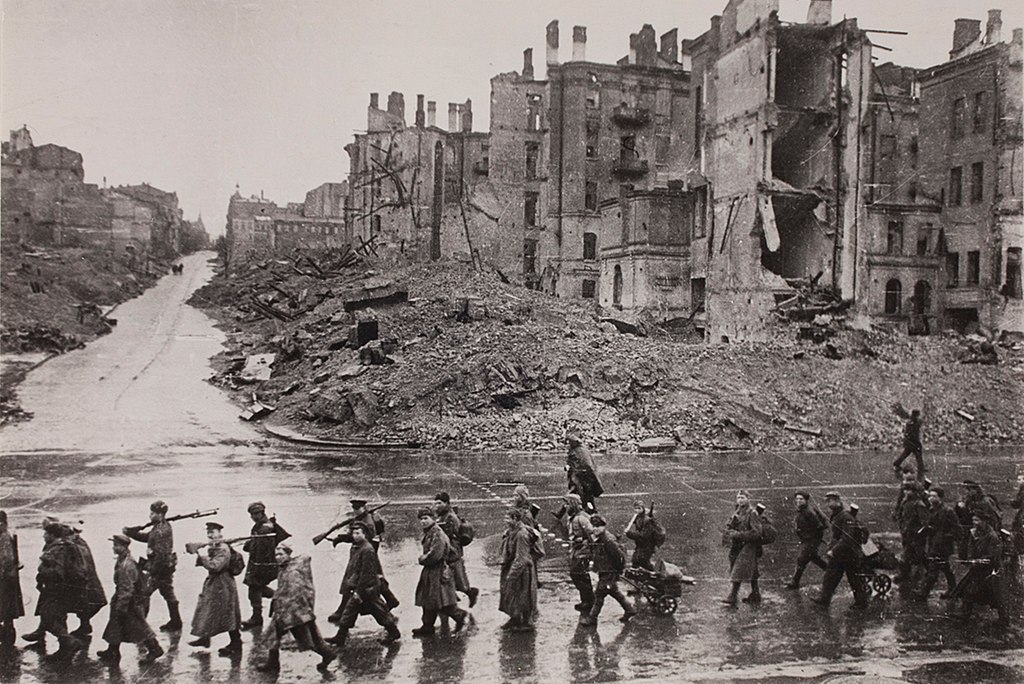
Soviets liberate Kiev, Ukraine
Germany

4 min read
Updated By: History Editorial Network (HEN)
Published:
On 6 November 1943, Soviet forces liberated Kiev, the capital of Ukraine, from German occupation. The battle formed part of the larger Dnieper–Carpathian offensive, following the Red Army’s successful crossing of the Dnieper River in October 1943. The operation was led by the 1st Ukrainian Front under General Nikolai Vatutin, supported by armored units commanded by General Pavel Rybalko.
German forces in the region, primarily from Army Group South under Field Marshal Erich von Manstein, had heavily fortified positions around Kiev, seeking to hold the city as a key strongpoint on the Eastern Front. Soviet planners executed diversionary attacks north of the city while preparing a concentrated assault from the north and west. In the early hours of 6 November, the Red Army launched its main attack, breaking through German lines and entering Kiev. By the evening, Soviet troops had secured control of the city, forcing German units to withdraw westward.
The liberation of Kiev held major symbolic and strategic significance. It was the largest city in Ukraine to be recaptured by the Soviets, boosting morale across the USSR and undermining German claims of holding firm defensive lines in the East. The victory also enabled Soviet forces to push further west, setting the stage for operations into Right-Bank Ukraine.
Kiev’s recapture was celebrated in Moscow with a 20-gun salute, marking one of the Red Army’s notable triumphs in the 1943 campaign that decisively shifted momentum on the Eastern Front.
#MomentsOfLife #MoofLife_Moment #MoofLife #WWII #EasternFront #Kiev1943 #SovietOffensive #Ukraine
Primary Reference
Battle of Kiev (1943)

Explore the Life Moments of
 AI Twin