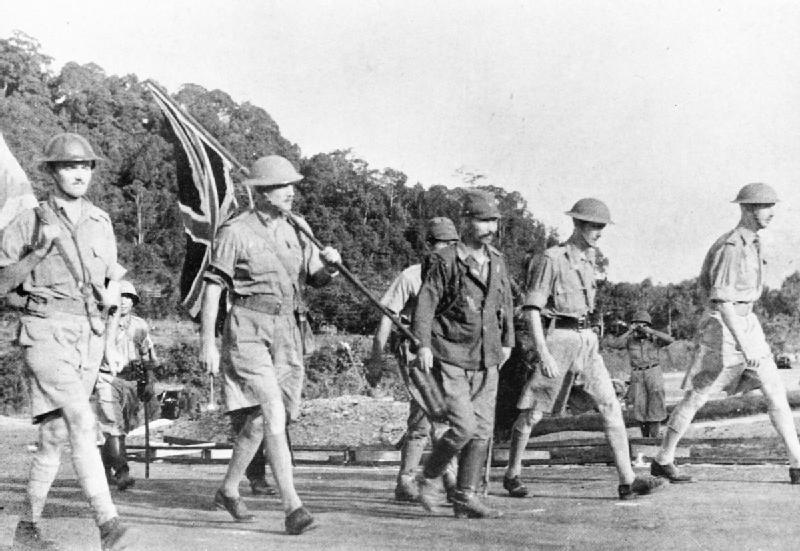
Singapore surrenders to Japanese forces
Germany
'/%3e%3cuse xlink:href='%23a' transform='translate(288.889 -214.211)'/%3e%3cuse xlink:href='%23a' transform='translate(108 342.749)'/%3e%3cuse xlink:href='%23a' transform='translate(469.189 342.749)'/%3e%3c/svg%3e)

Military History
World War II
Colonial History
4 min read
Updated By: History Editorial Network (HEN)
Published:
Updated:
The surrender of Singapore to Japanese forces marked a pivotal moment in World War II and is often regarded as one of the most significant defeats in British military history. The fall of Singapore occurred after a prolonged campaign where Japanese forces executed a well-coordinated attack, exploiting weaknesses in the British defenses. The British military, which had considered Singapore an impregnable fortress, was unprepared for the speed and ferocity of the Japanese assault. The loss of Singapore not only resulted in the capture of thousands of British and Commonwealth troops but also had far-reaching implications for British colonial power in Asia. The event shifted the balance of power in the region and emboldened Japanese expansion throughout Southeast Asia, leading to further military engagements in the Pacific theater.
The impact of Singapore's surrender extended beyond immediate military consequences. It served as a wake-up call for the Allies regarding the capabilities of Japanese forces and the need for a reevaluation of military strategies in the Pacific. The defeat also had psychological effects, leading to a loss of confidence among British and Commonwealth forces. In the aftermath, the Japanese committed atrocities, such as the Banka Island Massacre, where Australian military nurses were killed, highlighting the brutal nature of the conflict. The surrender of Singapore is often studied in military history as a case of strategic miscalculation and the importance of adapting to evolving warfare tactics.
#mooflife
#MomentOfLife
#SingaporeSurrender
#JapaneseForces
#BritishMilitaryHistory
#WorldWarIi
#PacificTheater
Primary Reference
Fall of Singapore

Explore the Life Moments of
 AI Twin